


MilanoStyle Newsletter
Violent protests, damaged storefronts and looting disrupted Milan's historic centre on 17–18 October 2026. Now, security concerns have spread to nearby Como and Lecco, where businesses and authorities are taking precautions.
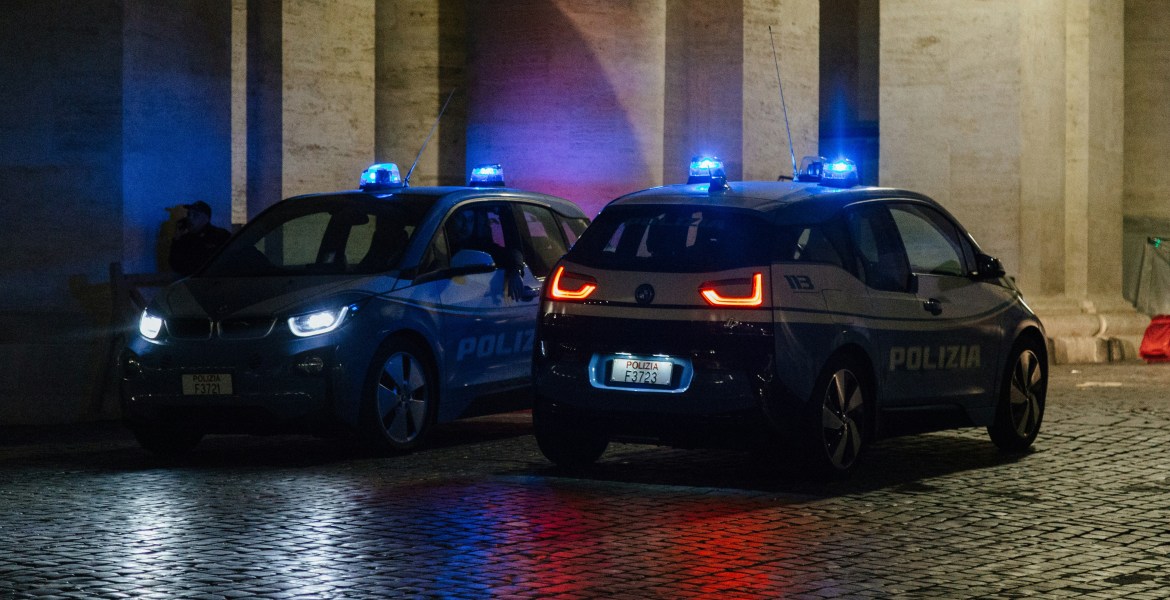
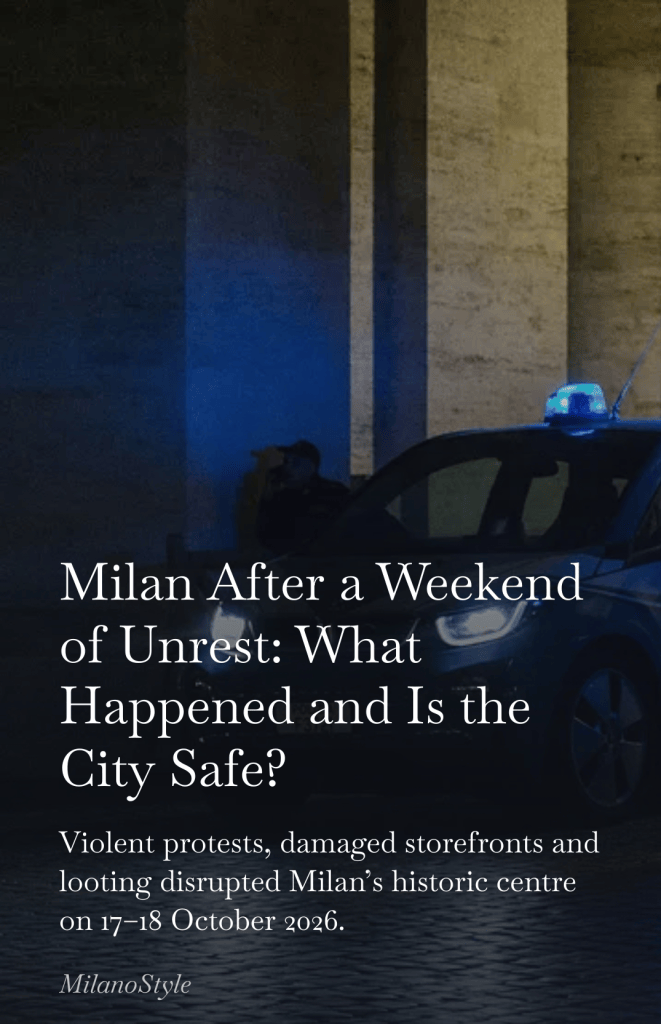
(Featured image by Alex Suprun/Unsplash)
In this article
Milan, 20 October 2026 — A weekend of protests turned into two days of serious disorder in central Milan, with clashes between police and groups of young demonstrators, smashed shop windows, looting and frightened pedestrians seeking shelter.
The violence unfolded in some of the city's busiest shopping and tourist areas, including Piazza Duomo, Via Torino, Corso Vittorio Emanuele II and the historic Galleria Vittorio Emanuele II.
For a city internationally associated with fashion, commerce and culture, the scenes were deeply unsettling. Yet while the violence should not be understated, neither should it define Milan's everyday character. Milan remains generally safe for visitors, although the possibility of further demonstrations calls for additional caution in the coming days.
Why Were People Protesting?
The demonstrations began on Saturday, 17 October, under the banner of Italia in Piazza, a movement expressing frustration over the rising cost of living, low wages, expensive fuel, inadequate public services and broader economic pressures on Italian families.
According to Corriere della Sera, more than 5,000 people participated in Saturday's march. Among the demonstrators were students and young people demanding better living conditions and greater opportunities for their generation.
The gathering reflected wider protests taking place in several Italian and European cities, notably in France, where similar economic grievances have brought thousands into the streets.
What began as a largely peaceful expression of discontent, however, quickly deteriorated.
How the Protests Turned Violent
On Saturday afternoon, tensions escalated around Via Broletto, where groups began throwing stones, bottles and firecrackers at police. Officers responded with crowd-control measures, and the march fragmented into smaller groups moving towards Piazza Duomo and the surrounding streets.
According to reports in Rai News, groups of masked youths subsequently entered the Galleria Vittorio Emanuele II area, where police intervened and businesses closed their shutters.
The disturbances continued on Sunday, 18 October, when some of the most extensive looting occurred along Via Torino, one of Milan's principal shopping streets.
Reports from ANSA and Corriere della Sera described young people smashing storefronts and forcing their way into shops, including Foot Locker, Champion, Carrefour and other fashion and sportswear retailers. Outdoor café furniture, waste bins and bicycles were overturned or used to cause damage.
The danger extended well beyond the businesses targeted. Saturday is traditionally one of the busiest shopping days in central Milan, and the weekend's violence unfolded among tourists, families and residents who had simply come to enjoy the city.
Shoppers and pedestrians found themselves caught in sudden confrontations, with some running for shelter inside nearby businesses and metro stations. Police deployed tear gas and water cannons to disperse the groups.
These were not merely disruptive demonstrations. The deliberate destruction of property and theft of merchandise placed innocent bystanders at risk.
Vlogger Jonathan Di Milano posted this video of the events that took place on Oct 17th 2026.
Who Was Responsible?
Investigations have revealed an especially troubling aspect of the unrest: the young age of many of those involved.
According to police figures reported by ANSA on 19 October, 271 people were taken to police headquarters following Sunday's violence, including 220 minors. Thirty-two people were arrested, while another 28 were reported to judicial authorities.
Prosecutors have sought pretrial detention for several suspects accused of offences including aggravated resistance to police, devastation and looting. The investigations and judicial proceedings are continuing.
An important distinction is emerging between the original demonstrators and those responsible for the destruction.
While the initial protest had identifiable social and economic demands, many of those subsequently involved in the violence appeared to have little direct connection to its organisers.
Reports in the Italian press described how videos and messages circulating on Instagram, TikTok and Telegram helped attract additional groups of young people to the city centre, some arriving after the confrontations had already begun.
Investigators are examining how these gatherings developed, including possible coordination through social media. No single organiser has been conclusively established as responsible for the full extent of the violence.
Milan's Shops Close as Police Increase Security
By Monday, 19 October, the atmosphere in central Milan had changed considerably.
Several prestigious boutiques in the Quadrilatero della Moda closed their doors or removed merchandise from their displays as a precaution against further incidents.
MilanoStyle also has firsthand confirmation that shops in the Galleria Vittorio Emanuele II were closed, with police officers stationed nearby and prepared to respond to any renewed disturbances.
La Repubblica reported that Prada had temporarily closed its Galleria boutiques and removed merchandise, while other retailers restricted access or lowered their shutters.
Reports in the Italian and international press placed preliminary estimates of damage to businesses at approximately €1 million.
The heightened precautions reflect concern about possible further incidents, rather than evidence that all parts of the city are experiencing disorder.
Concerns Spread to Lake Como
Possible gatherings in Como
The events have also prompted concern beyond Milan. Local news publication QuiComo reported that messages circulating through WhatsApp and social media suggested two possible gatherings in Como on Saturday, 24 October, one presented as a peaceful protest and another raising fears of vandalism.
The publication noted that the authenticity of the circulating messages had not yet been verified.
Separately, Il Giorno reported that investigators from Como's Digos (police) had identified two WhatsApp groups apparently discussing plans to repeat the destruction seen in Milan, including possible attacks on commercial premises.
The reports have prompted heightened attention from local authorities. However, the existence of threatening messages does not establish that violence will take place, and peaceful demonstrations must be distinguished from plans to commit criminal acts.
Lecco on Alert: Shops Secure Their Premises as Police Prepare
The concern has reached Lecco, the picturesque lakeside city on the southeastern shore of Lake Como, where authorities and local businesses spent Tuesday, 20 October, preparing for possible disturbances.
Il Giorno reported that anonymous messages circulating on TikTok called for a gathering in Piazza XX Settembre at 4 p.m. on Tuesday, with references to repeating or exceeding the violence recently witnessed in France and Milan.
The warnings prompted Lecco's prefect, Paolo Ponta, to convene an emergency meeting of the Provincial Committee for Public Order and Security. Authorities subsequently increased monitoring and police presence in sensitive parts of the city.
Local publication LeccoToday reported on the heightened security measures in the city centre on Tuesday morning.
MilanoStyle witnessed the precautions firsthand. Several shops in Lecco's historic centre had lowered their security grilles, while cafés and restaurants had stacked or removed outdoor tables and chairs. Police officers were stationed in Piazza XX Settembre, one of the city's principal gathering places, ready to intervene should the situation escalate.
The precautions were particularly striking in a city better known for its relaxed lakeside atmosphere, pedestrian streets and outdoor café culture.
Leccoonline reported that some businesses had removed valuable merchandise from their displays. At Ottica Valli in Via Roma, staff cleared the shop as a precaution, while nearby Cartoleria Cattaneo removed its Montblanc collection from the window.
The publication also described restaurants clearing tables from Piazza XX Settembre, reflecting the anxiety among independent businesses concerned about potential damage to their premises.
Meanwhile, Prima Lecco reported an increased police presence around the railway station, shopping areas and the historic centre. Importantly, its Tuesday morning report described the situation as calm, with most businesses continuing to operate normally.
At the time of these reports, the security measures in Lecco were preventive. There was no confirmation that the threatened gathering had developed into violent disorder.
The scenes nevertheless demonstrate how quickly fears generated by events in Milan can affect commercial and everyday life in neighbouring communities.
Is Milan Still Safe to Visit?
Yes, Milan remains generally a safe city to visit, but visitors should remain attentive to developments. The same measured advice applies to Como and Lecco.
The weekend's events were serious and unusually disruptive. They affected some of Milan's most recognisable landmarks and exposed shoppers, residents and visitors to unacceptable danger.
Nevertheless, the disturbances were concentrated in particular areas and circumstances. They do not represent everyday life across Milan's neighbourhoods, museums, restaurants, hotels and cultural attractions.
Nor should the precautionary measures in Como and Lecco be mistaken for evidence that the violence has spread to those cities. At present, the reports concern potential gatherings and the steps authorities are taking to prevent further disorder.
For those planning a visit in the coming days, it is sensible to follow local news, avoid large demonstrations and areas where police are managing crowds, and allow for possible changes to shop opening hours, public transport and access to central shopping streets.
The city is also taking steps to recover. Businesses are assessing damage, authorities are investigating those responsible, and additional security measures are being considered.
Milan has always been a place where commerce, creativity and public life meet in its streets and squares. Peaceful protest belongs to that civic life. Violence and intimidation do not.
The events of 17 and 18 October deserve serious attention, both for the damage caused and the underlying frustrations that brought people into the streets. But two days of unrest should not be mistaken for the character of an entire city.
Sources and Further Reading
- ANSA, 19 October 2026, Police figures on the Milan disturbances, injuries and arrests
- Rai News, 18 October 2026, Further clashes and looting in central Milan
- Reuters, 19 October 2026, Milan luxury shops close as government prepares troop deployment
- Il Giorno, 20 October 2026, Investigators identify messages concerning possible disturbances in Como and Lecco
- LeccoToday, 20 October 2026, Lecco city centre under heightened security
- La Provincia, 19 October 2026, Lecco authorities respond to messages calling for unrest
- Leccoonline, 20 October 2026, Lecco businesses remove outdoor furniture and secure merchandise
- Prima Lecco, 20 October 2026, Increased police presence across Lecco
- Qui Como, 20 Ocotber 2026, Panico sul Whatsap a Como
Discover more from MilanoStyle.com
Subscribe to get the latest posts sent to your email.