

Get our free newsletter about Italy, travel and style. Get updates, news and articles straight to your inbox. Subscribe.
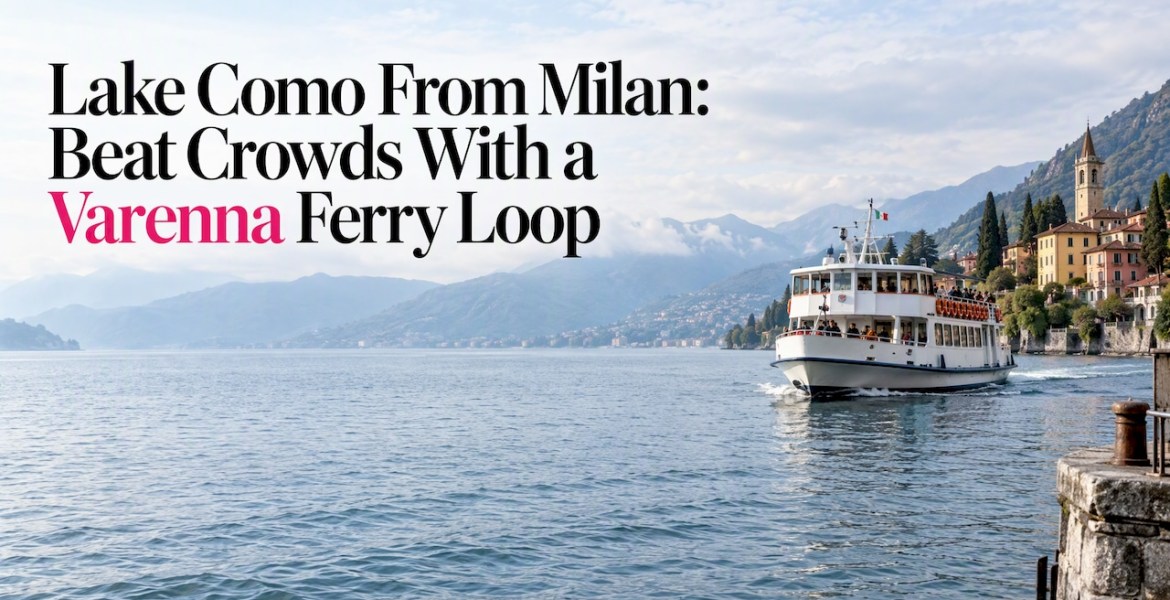
Take the train from Milano Centrale to Varenna-Esino, explore Varenna, ferry across to Bellagio, then return to Varenna for the evening train back to Milan. It drops you into the central “Golden Triangle” with minimal transit time. Check Trenord for trains and Navigazione Laghi for ferries, and aim to be on the lake before 9:00 am to stay ahead of the crowds.
TL;DR:
- Como San Giovanni takes 37 to 40 minutes and costs about €5.20, but the southern town leaves central villages out of easy reach.
- A Varenna to Bellagio ferry takes 15 minutes and costs about €5.20 each way; a day pass usually pays off after three hops.
- Ferry frequencies change seasonally, so check the current timetable and last return train before leaving; missing the last boat can mean an expensive taxi.
- Varenna station requires an 8 to 10 minute walk downhill to the waterfront, while Como Nord Lago is lakefront; confirm step free boarding with operators.
Table of Contents
- Which Lake Como route from Milan fits your day?
- Which train should you take from Milan?
- How does the Lake Como ferry network work?
- What does a realistic Lake Como day look like?
- Which Lake Como town should you prioritize?
- What small mistakes cost travelers the most time?
- Is there a combined train and ferry ticket?
- Where should you stop for lunch?
- Can you do Lake Como with limited mobility?
- When is the best time to visit Lake Como?
- Why the Varenna-first route works for Milan visitors
- Want a Lake Como day built around your dates?
- FAQ
- Sources
Which Lake Como route from Milan fits your day?
Your choice comes down to what you want most: classic lakeside scenery, a quick city visit, or full control of your schedule. Earth Trekkers recommends the Varenna, Bellagio, Varenna loop for first-timers because Como town sits at the lake’s southern tip, far from the postcard villages, and combining both tends to produce a rushed day.
- Varenna route: best for central-lake scenery and ferry hopping. The direct train takes about an hour and costs about €7.40 one-way, according to Milan Tourism’s 2026 transport guide.
- Como route: the fastest way to reach Como town from Milano Centrale, for around €5.20. It suits the cathedral and the funicular to Brunate, but it leaves the central villages out of easy reach.
- Driving or a private transfer: flexible, but summer traffic and parking can add time and extra cost to your day.
- Organized tours: they handle the logistics, at a higher price and with less time to wander on your own.
For most Milan visitors on a single day, the train plus ferry combination wins on time and cost.
Which train should you take from Milan?
Milan has two relevant departure stations, and they are not interchangeable. Milano Centrale and Milano Cadorna run on different networks, and each one drops you at a different spot on the lake. Milan Tourism lays out the main options:
- Milano Centrale to Varenna-Esino: direct trains take about an hour, with a fare around €7.40.
- Milano Centrale to Como San Giovanni: the quickest option at roughly 37 to 40 minutes for about €5.20.
- Milano Cadorna to Como Nord Lago: about 57 to 67 minutes for roughly €4.80.
Arrival convenience matters as much as speed. Como San Giovanni sits above the water, so expect a downhill walk of about 15 minutes or a short taxi to the docks. Como Nord Lago is right on the lakefront. Varenna-Esino is an 8 to 10 minute walk down to the waterfront, and travel writer Victoria Vanderberg points out that treating all the Como stations as equal is a common mistake.
For tickets, use Trenord’s channels or the station machines, and keep your e-ticket handy for inspection. If you plan a late return, check the last train times before you leave Milan so you are not stuck negotiating an expensive late-night taxi.
How does the Lake Como ferry network work?
Navigazione Lago di Como runs three kinds of service: regular boats (battelli), faster hydrofoils, and the frequent Centro Lago shuttle that links Varenna, Bellagio and Menaggio every 20 to 30 minutes in peak season. The regular boats are slower but give you the open-deck views that make the trip worth doing.
The operator’s official tariff document is the authority on fares, and its rates page explains daily navigation passes. Sample figures for planning:
| Crossing | Service | Time | One-way fare |
|---|---|---|---|
| Varenna to Bellagio | Regular ferry | about 15 minutes | about €5.20 |
| Como to Bellagio | Slow battello | about 2 hours 15 minutes | €15 to €23 |
| Como to Bellagio | Hydrofoil | about 37 to 40 minutes | about €17 |
Day passes run roughly €15 to €23 depending on zone and boat type, so check current rates before you decide. If you plan three or more hops, a pass usually beats buying singles. For a simple Varenna, Bellagio, Varenna day, two singles can come out close, so do the math against your actual itinerary.
Buy in advance on the Navigazione Laghi website to skip ticket-window lines, and look at the seasonal timetable, since frequencies change through the year. Ferry ticket types also differ between passenger boats and the car-carrying traghetto, so make sure you are looking at the right service.
What does a realistic Lake Como day look like?
Here is a timed plan that hits the highlights without sprinting. It follows the route Heritance Italy recommends for 2026: Milan Centrale, Varenna, Bellagio, Varenna, Milan.
- Board an early direct train from Milano Centrale to Varenna-Esino, aiming to arrive before the crowds.
- Walk down to the waterfront, stroll the lakeside, and visit Villa Monastero if gardens appeal to you.
- Take the roughly 15 minute ferry to Bellagio.
- Have lunch in Bellagio, then take a short walk through the stepped lanes and viewpoints.
- Make an optional hop to Menaggio for a quieter promenade, or visit a villa if you prefer.
- Take the ferry back to Varenna with a comfortable buffer.
- Catch an evening train back to Milan.
For budget, add up a round-trip train (about €14.80 using the Varenna fare above), two or three ferry hops at the sample fares, one small paid attraction, and coffee plus lunch. Most of the spending is lunch and ferries, so a day pass only pays off if you add stops.
One rule keeps the day safe: do not plan to be at the farthest point late in the afternoon. Wander With Sasha warns that missing the last ferry back to the rail hub can force a costly late taxi to Milan.
Which Lake Como town should you prioritize?
If you can only commit to one, pick based on what you want from the day.
- Varenna: compact, photogenic and directly on the rail line. It is a natural base, and Villa Monastero is an 8 to 10 minute walk from the station area.
- Bellagio: the postcard view, with terraced gardens and the best setting for a long lunch. It gets crowded around midday, so arrive early or linger into the late afternoon.
- Menaggio: a more relaxed promenade and often better-value lunches. It is a calmer alternative if Bellagio feels packed.
- Como: choose it if you want the cathedral, a real city feel and the funicular to Brunate, and you prefer a shorter ride over ferry hopping.
For a deeper read on Bellagio, our feature Bliss in Bellagio, Lake Como covers what to see and where to eat once you step off the boat.
What small mistakes cost travelers the most time?
Most lost time comes from starting late and skipping a little planning. The lake fills up from mid-morning, and ferry lines grow with it. Wander With Sasha suggests reaching the lake by about 8:30 am so you can enjoy the promenade before the rush, and Heritance Italy backs the early start too.

Buy ferry tickets or a day pass ahead on the operator’s site, and check the 2026 timetable the night before, since seasonal changes can shift departures. Pack light, wear comfortable shoes (the towns are full of stairs and cobbles), and carry a little cash in euros for small purchases.
Pro Tip: Choose regular ferries over hydrofoils if you want scenic photos; the open decks and slower pace are worth the extra minutes.
Is there a combined train and ferry ticket?
Not as a single official product that we can point you to. Trenord sells the train, and Navigazione Laghi sells the boat, so for a Varenna day you will normally hold two separate tickets. That is not a hardship: the train fare is low, and the ferry side is where a pass can save you money.
The operator publishes daily navigation passes, and its rates page also mentions coordinated promotions with local municipalities. These change, so treat any bundle you see advertised as something to verify on the official site before you pay.
A simple way to decide: count your planned boat legs. With only Varenna to Bellagio and back, singles are straightforward. If you add Menaggio or another stop, price the day pass against the singles on the tariff sheet. Keep your digital tickets in one place on your phone, since you will be showing them to different staff throughout the day.
Aggregators and organized tours sometimes bundle transport with a guide. Those cost more and trade away flexibility, so they make sense mainly if you want zero logistics. If you are building a longer rail-based trip, our guide to Milan and the Lakes by Train shows how to link several days without a car.
Where should you stop for lunch?
Lunch is where this day can quietly go wrong, because the most scenic waterfront tables charge for the view and fill up fast. A few principles serve you better than a single restaurant name.
In Bellagio, the lakefront terraces are lovely for a long, slow meal, and a reservation helps at midday. If you would rather keep the budget in check, walk a few lanes back from the water, where cafes and trattorie tend to be cheaper and quieter. Our feature on Bellagio has more detail on places worth your time.
Menaggio is the better-value option and, as noted above, often feels calmer at lunchtime. In Varenna, a coffee and a light bite by the water before the ferry works well, which saves your main meal for Bellagio or Menaggio.
Practical habits matter more than any one address. Eat slightly earlier or later than the noon rush, confirm that the place takes cards or carry some euros, and leave yourself enough time to reach the dock for your return boat. A long lunch that runs past your ferry is the classic way to lose an evening train.
Can you do Lake Como with limited mobility?
The train-and-ferry route can work, but go in knowing the terrain. The lakeside towns are built on slopes, and many lanes are stepped or cobbled. Varenna-Esino sits above the water, with an 8 to 10 minute walk down to the waterfront, and Como San Giovanni involves a downhill walk of about 15 minutes or a taxi. Como Nord Lago is the easiest arrival because it is directly on the lakefront.
If walking uphill is difficult, consider these choices:
- Arrive at Como Nord Lago from Milano Cadorna and stay on level ground by the water.
- Use a taxi between stations and docks instead of walking the slope.
- Pick a town with a flatter promenade, such as Menaggio, rather than hopping between steeper villages.
We cannot verify step-free boarding on every vessel or elevator availability at each station, so confirm directly. Ask Trenord about assistance at your departure and arrival stations, and ask Navigazione Laghi about boarding on the specific boat and pier you plan to use. Contact them before the day, not at the dock.
Keep the plan slim. Fewer hops mean fewer boardings, fewer slopes and more time to enjoy one place properly.
When is the best time to visit Lake Como?
Late spring and early autumn tend to give the best balance of pleasant weather, working ferry schedules and manageable crowds. Summer brings the fullest timetables and the busiest piers, along with the traffic that makes driving less attractive. Our sources do not give month-by-month weather data, so check a forecast close to your date rather than trusting averages.
Seasonality affects ferries directly. Frequencies change through the year, which is why we keep pointing you to the current timetable. A summer schedule that runs every 20 to 30 minutes between the central towns may thin out in the shoulder months, and that raises the cost of missing a boat.
Weather changes the experience more than the logistics. Clear days reward the open-deck ferries and Bellagio’s viewpoints, while low cloud or rain flattens the famous views and makes the stepped lanes slippery. If the forecast is poor, shift toward Como town, where the cathedral and indoor options give you more to do, and keep the Varenna plan for a better day.
For a more scenic seasonal twist, our page on the Lake Como and Bernina Scenic Train covers a longer excursion that pairs well with the lake when you have more than a day.
Why the Varenna-first route works for Milan visitors
I send people to Varenna first because it protects the one thing a day trip lacks: time. You land on the water within about an hour, skip the climb from Como San Giovanni, and spend your hours in the central lake instead of in transit. At Milanostyle, our focus is stylish, efficient Milan itineraries, and this route is the kind of tight plan we trust. If you want timing and bookings handled, our team can build it around your dates.
— Celia
Want a Lake Como day built around your dates?
Our Personalized Italy Itinerary turns this route into a plan tailored to your arrival time, pace and season, so you spend the day on the lake rather than on timetables.

- We map the train and ferry timing so your return connection holds.
- We share reservation tips for the meals and sights that fill up.
- We prepare alternate plans for seasonal timetable changes.
You can start on our personalized itinerary page. Our travel consultation is listed at 75 € per hour, and custom itineraries carry an additional 35 € per day planned; current prices are on our travel consultation page.
FAQ
Is Lake Como close to Milan?
Yes. Direct trains reach the lake in about 37 to 67 minutes depending on the station, according to Milan Tourism. That makes a day trip very doable.
Is Lake Como in Italy worth the trip?
Yes, especially the central lake around Varenna, Bellagio and Menaggio, which most first-timers prioritize on a one-day visit. Starting early helps you see it before the crowds build.
How much is a train ride from Milan to Lake Como?
Fares depend on your route. Milan Tourism lists about €4.80 to Como Nord Lago, about €5.20 to Como San Giovanni and about €7.40 to Varenna.
What major Italian city is closest to Lake Como?
Milan is the closest major city, with direct train service from Milano Centrale and Milano Cadorna. Your arrival station changes how far you walk to the water.
Sources
- Lake Como Day Trip from Milan or Lugano: How to Plan the Perfect Visit
- How to Get from Milan to Lake Como: Trains, Cars and Tour Buses (2026)
- tar A4_042026_eng
- Day trip from Milan to Lake Como: how to do it right in 2026
Recommended
- Tour: Lake Como & Bernina Scenic Train (Daily Departures)
- Milan and the Lakes by Train: A Stylish Week in Northern Italy Without a Car
- In the Hills of Lake Como: An Unassuming Exterior Hides a Culinary Gem
Written with BabyLoveGrowth’s technology
Discover more from MilanoStyle.com
Subscribe to get the latest posts sent to your email.