

Get our free newsletter about Italy, travel and style. Get updates, news and articles straight to your inbox. Subscribe.
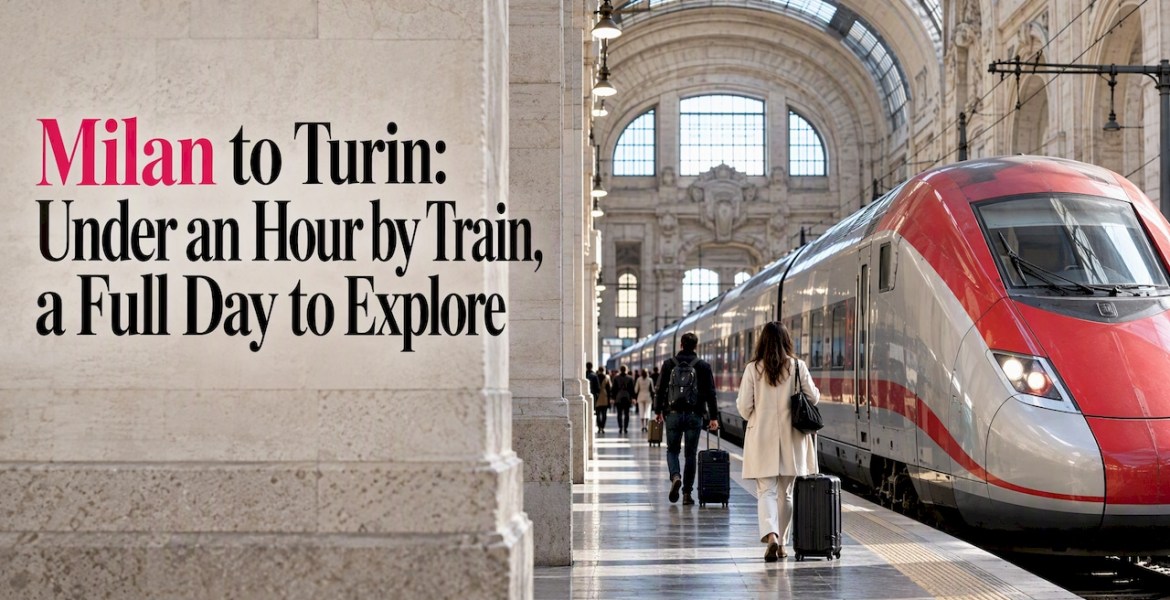
The high-speed train is the fastest and most practical way to reach Turin from Milan, and a day trip works well if you leave early and book a fixed evening return. Fastest services reach Turin in under an hour, while a typical train takes a little over an hour. Fares move with demand, so book ahead.
TL;DR:
- Roughly 30 trains run daily, arriving at either Porta Susa or Porta Nuova; check your ticket and map the walk to your first sight.
- Italo advertises fares from €8.90, but date, class, and availability affect the final price, so check the operator’s checkout before budgeting.
- A bus can cost less, but fewer departures may force an early return; compare the fare savings with the sightseeing time you would lose.
- Reserve timed museum entries and the Mole’s panoramic lift early, especially on busy dates, and confirm each venue’s hours before setting your schedule.
- Driving suits groups with luggage or travelers adding nearby stops, but traffic, tolls, and central parking add costs and complications for a simple visit.
Table of Contents
- How do the train, bus, car, and rideshare compare?
- Which trains and stations should you use?
- Is the bus worth it for a day trip?
- When does driving to Turin make sense?
- What does a realistic one-day itinerary look like?
- Which Turin sights should you prioritize?
- How do you avoid overpaying and missed reservations?
- What should travelers with reduced mobility know?
- Where can you eat near the stations in Turin?
- How do seasons and events affect your trip?
- Celia’s perspective: why we choose trains for day trips
- Want a done-for-you Turin day plan?
- FAQ
- Sources
- Where can you verify times, fares, and tickets?
How do the train, bus, car, and rideshare compare?
Your choice comes down to three trade-offs: speed, price, and flexibility. Here is the short version before we go deeper into each mode.
- Train: The fastest option with frequent departures. Promotional “from” fares exist, but the price at checkout depends on date, time, and class.
- Bus: Usually the cheapest ticket, but expect a longer trip and fewer departures.
- Driving: Travel time depends on traffic. It suits groups and side trips, but parking in central Turin can be tricky.
- Rideshare and coach apps: Occasional savings, but schedules vary, so they are a weaker fit for a day trip with a fixed return.
For most travelers staying in Milan, the train wins on time and stress. The rest of this guide shows how to use it well, and when another mode makes sense.
Which trains and stations should you use?
Trains leave from Milano Centrale, the city’s main station. On the Turin end you will usually arrive at either Torino Porta Susa or Torino Porta Nuova. Both are used by services on this route, and the one printed on your ticket changes your walk. If your first stop is the Royal Museums around Piazza Castello, or you are heading toward the Egyptian Museum, check a map before you buy. The Trenitalia timetable shows which station each service uses, so confirm yours.
Frequency is on your side. Trainline reports an average journey of about 1 hour 13 minutes between Milan and Torino Porta Susa, roughly 30 trains per day, and fastest journeys from about 47 minutes. Some high-speed services can be quicker still, so compare departures for your exact date.
On price, Italo advertises Milan to Turin fares from €8.90. Treat that as a limited promotional fare, not what most travelers will pay. The final price depends on date, class, and availability, so check the operator’s checkout before you plan around any “from” number.
- Arrive early: Give yourself extra time at a large station like Milano Centrale to find your platform.
- Watch the displays: Platforms are often announced shortly before departure.
- Check seat rules: Confirm whether your fare includes a reserved seat.
- Verify the arrival station: Porta Susa or Porta Nuova, before you pay.
Pro Tip: Book your evening return at the same time as your outbound ticket, so a sold-out last train never cuts your day short.
Is the bus worth it for a day trip?
Buses are the budget route. They typically take longer than trains, and they leave from designated coach stations in Milan rather than the main rail hub. Ticket prices tend to be lower than rail, which matters if you are traveling on a strict budget or covering several people.
The catch is schedule. Bus departures are less frequent than trains, and a day trip depends on a reliable return. Before you buy, look closely at the last departure from Turin and work backward from it.
- Best for: Travelers watching every euro who can accept a longer ride.
- Watch out for: Fewer return options, which can force you to leave Turin earlier than you want.
- Our take: If the price gap is small once you add the lost hours, the train is usually the better use of a single day.
When does driving to Turin make sense?
Driving time depends on traffic. Driving can still be competitive on paper, but you also need to budget for highway tolls and parking once you arrive. Central parking can be limited near the major sights, and city streets add time you do not spend when a train drops you near the center.
A car earns its place when your day has more than one stop or you are traveling as a group with luggage. If you want to pair Turin with nearby towns, our day trip drive itinerary from Turin to Asti to Serravalle shows how a multi-stop drive can work.
For a simple there-and-back visit focused on museums and walking, the train usually saves time and stress. You skip the parking hunt, and you can read, rest, or plan your next stop on the way.
What does a realistic one-day itinerary look like?
Turin rewards focus. Turin’s tourism authority points visitors toward reserving main timed attractions in advance, and a plan built around two major sights beats a rushed checklist. Here is a sample day.
- Early morning: Catch an early direct train from Milano Centrale so you arrive in time for a mid-morning museum slot.
- Mid-morning: Visit your first timed attraction, with tickets reserved in advance.
- Lunch: Eat near Piazza Castello, which keeps you close to your next stop.
- Afternoon: Add a second attraction or a walking route through the central squares.
- Late afternoon: Leave a buffer for city navigation, a ticket line, or a slow walk back to the station.
- Evening: Board your pre-booked return train to Milan.
Build in more buffer than you think you need. Published museum hours are set by each site and can change on specific dates, so confirm them on the official pages before you lock in your timings.
Pro Tip: Put your timed museum entry first and let everything else flex around it, since that is the one slot that cannot move.
Which Turin sights should you prioritize?
Pick two. The central highlights are close enough to pair, but not close enough to rush through all of them.
The Egyptian Museum holds one of the world’s top collections of its kind. The tourism authority lists it at Via Accademia delle Scienze 6 and recommends booking ahead, so see its Museo Egizio page for details.
The Royal Museums cluster royal collections around Piazza Castello, which makes them an easy partner for a lunch stop nearby.
The Mole Antonelliana, home to the National Cinema Museum, is the city’s iconic building. Its panoramic lift is worth reserving in advance so you are not stuck in a line or facing a sold-out slot.
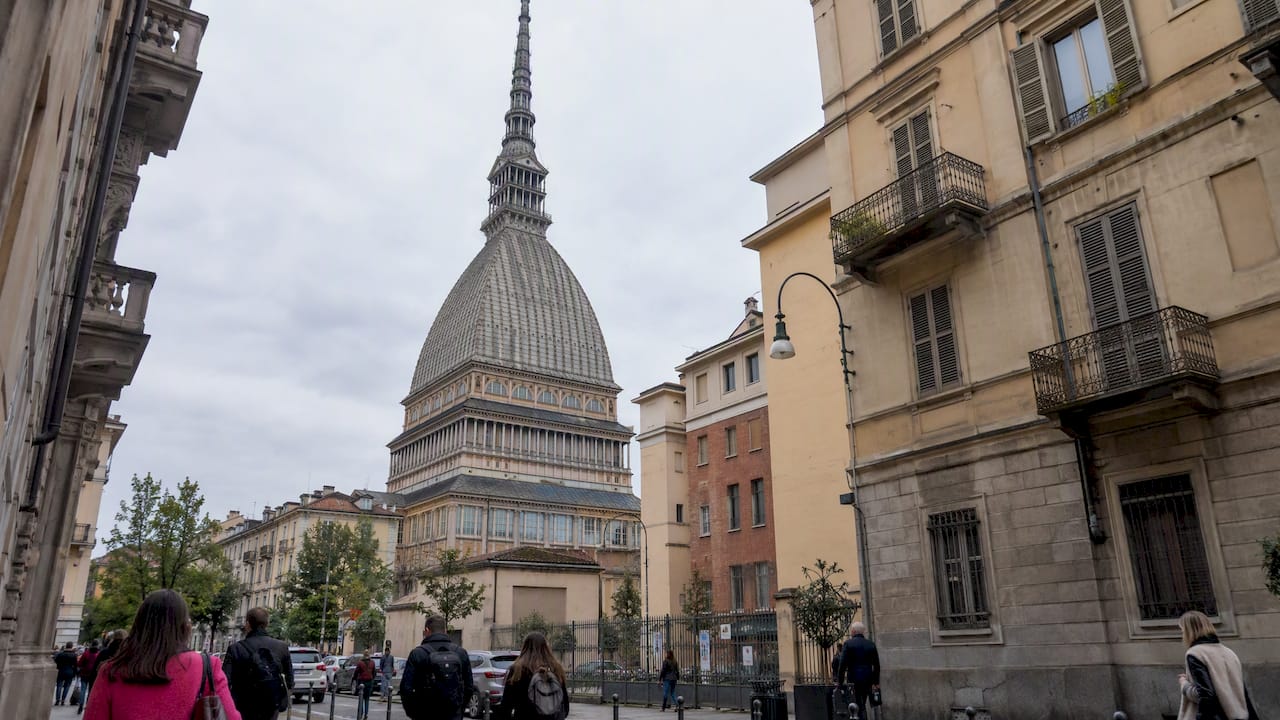
Two pairings work well. Combine the Egyptian Museum with the Royal Museums for a culture-heavy day. Or pair the Cinema Museum with a slow walk under the city’s arcades if you want something lighter.
How do you avoid overpaying and missed reservations?
Most problems on this trip are avoidable with a little planning. Here is what to check.
- Book trains early: Advance purchase gives you the best chance at promotional fares, but always confirm the operator’s checkout price before you commit.
- Compare operators: Omio lets you view services side by side. Low fares and the fastest trains are separate goals, so compare the same departure across operators.
- Check the arrival station: Porta Susa and Porta Nuova put you in different parts of the city, so plan your walk accordingly.
- Reserve timed tickets: Book museum entries and the Mole panoramic lift online to avoid queues and missed slots.
- Plan for bags: If you have a late return or are changing hotels, see our guide to luggage storage in Milan before you leave.
What should travelers with reduced mobility know?
Plan this part early, because assistance often works best when arranged ahead. Large stations like Milano Centrale are busy, so allow extra time to reach your platform and board without pressure. Both Turin stations can be your arrival point, so confirm which one your ticket uses and consider the walk from there to your first stop.
Contact the rail operator before you travel to ask what assistance it offers and how far in advance to request it. Rules and services differ by operator, so we do not list specifics here. Ask for help with boarding, seat placement, and getting from the platform to the exit.
On the Turin side, choose attractions with the journey in mind. A compact itinerary of two sights reduces walking and fatigue, and a taxi from the station can shorten the distance to your first museum. Check each venue’s official page for access details and any timed-entry arrangements before you go.
Finally, favor the train over driving or a long bus ride if comfort matters. A direct, frequent service gives you a more predictable day, with fewer transfers and a reliable return. Build in rest stops and a generous buffer before your evening train so the last leg is calm, not rushed.
Where can you eat near the stations in Turin?
Eating well in Turin is easy, and you do not need to leave it to chance. Both major stations sit in busy parts of the city, so you will find cafes and quick bites close by. For a proper lunch, plan around your sightseeing instead of the station. Our sample itinerary places lunch near Piazza Castello, which keeps you near the Royal Museums and saves backtracking.
On the Milan side, grab a coffee and something small at Milano Centrale before you board, especially on an early departure. Pack water and a snack for the ride. A short trip does not need a full meal, but a delay or a long museum queue can leave you hungry.
For the day itself, think in two stops. A light breakfast or coffee at the station gets you moving. A sit-down lunch near your morning museum gives you a real break and a place to rest your feet. If you want a specific table, check current opening hours first, since restaurants close on different days and at different times.
Leave room for a late-afternoon coffee or snack before the train home. It gives you a calm last stop between your final sight and the station, and it keeps you from boarding tired and hungry.
How do seasons and events affect your trip?
Timing changes both prices and crowds. Holidays, school breaks, and major events can fill trains and raise fares, especially on popular morning and evening departures. Promotional fares tend to disappear as a travel date approaches, so the earlier you book in busy periods, the better your odds.
Crowds matter at the sights too. Timed museum entries and the Mole panoramic lift can sell out when demand is high, which makes advance reservations more important in peak seasons. Official opening hours can also change on specific dates, so check each venue’s page for your day.
Weather shapes the walking part of your day. A rainy or very hot day makes a long outdoor route less pleasant, so lean on indoor museums and the city’s arcades when conditions are poor. A clear day suits the panoramic lift and a longer stroll through the squares.
If your dates are flexible, a weekday outside major holidays is often easier than a peak weekend. Whatever the season, the same rule holds: lock in your outbound train, your return train, and your first timed entry as early as you can, and leave buffer for delays.
Celia’s perspective: why we choose trains for day trips
When a traveler has one day, the train gives it back to them. You skip traffic, tolls, and the parking search, and you arrive close to the center with energy left for the sights. That is why we build our Turin plans around the rail timetable first and everything else second. At MilanoStyle, we focus on insider timing and reservations, because a stylish day depends on not wasting a single hour.
— Celia
Want a done-for-you Turin day plan?
If you would rather not piece this together yourself, we can build it for you. Our Personalized Italy Itinerary is a custom plan for travelers who are short on time or want several stops handled well.
- A custom schedule built around your dates and pace
- Reservation advice for timed attractions
- Train times chosen to protect your sightseeing hours
Send us your dates and interests through the page, and we will take it from there. Current pricing details are on our website.
FAQ
How close is Milan to Turin, Italy?
Turin is roughly an hour from Milan by fast train and a little over an hour on a typical service. Trainline reports fastest journeys from about 47 minutes. By car, travel time depends on traffic.
Is Turin, Italy worth visiting as a day trip?
Yes, if you keep the plan focused. Two major sights, such as the Egyptian Museum and the Royal Museums, plus a relaxed lunch fit comfortably into one day. Turin’s tourism authority recommends reserving timed attractions in advance.
What city is near Turin?
Asti and Serravalle are popular nearby stops for a drive, which we cover in our Turin to Asti to Serravalle itinerary. Milan is the main large city you can reach by high-speed train.
Which cities are close to Milan?
Turin is one of the easiest additions by train from Milan. Many travelers also pair Milan with lake destinations, and our guide to Milan and the Lakes by train shows how to do it without a car.
Sources
- Italotreno
- Milan → Torino Porta Susa by Train from £8.81 ✅ | Cheap Tickets & Times | Trainline
- Musei Reali Torino | Royal Residence | Turismo Torino e Provincia
Where can you verify times, fares, and tickets?
Check official pages before you commit, since fares and hours change by date. The Italo Milan to Turin page shows operator fares, and Turin’s tourism pages cover museum details. Always confirm the final fare at the operator’s checkout and the slot availability on each museum’s official page.