

Get our free newsletter about Italy, travel and style. Get updates, news and articles straight to your inbox. Subscribe.
A navy suit, a pair of well-cut chinos and your favorite jeans can all work with a simple white shirt. The same belt, however, may look right with only one of them. A heavy buckle can overwhelm lightweight tailoring, while a slim, polished strap can feel out of place against faded denim.
Choosing a belt becomes easier when you consider it alongside the trousers and shoes you plan to wear. Width, texture, color and hardware all affect the result: a belt that suits wool trousers and loafers may look too delicate with jeans and boots.
Start with the trousers
Before looking at colours or buckle finishes, think about proportion. A belt should sit comfortably through the loops without squeezing into them or leaving so much space that it looks unusually narrow.
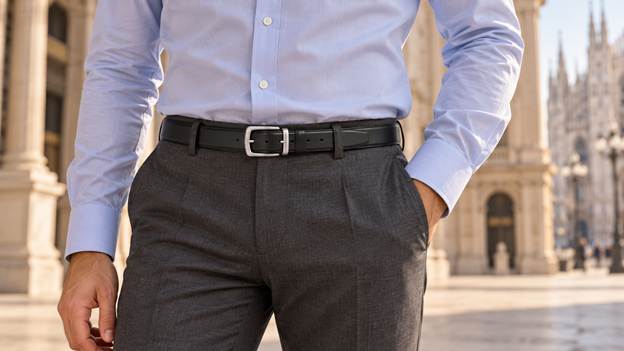
For tailored trousers with belt loops, a strap around 30–35 mm wide is a useful starting point. A smooth surface and a compact buckle work particularly well with fine wool trousers and a tucked-in shirt. Trousers with side adjusters or a waistband designed to be worn without a belt can be left as they are.
Chinos offer more flexibility. For a day of meetings followed by aperitivo in Milan, stone chinos, an Oxford shirt and brown loafers work well with a medium-width brown belt. Swap the shirt for a relaxed knit at the weekend and the same belt still has a place.
With denim, there is room for a wider strap, a more pronounced grain or a heavier buckle. Try a belt around 35–40 mm wide, provided it fits the loops. These measurements are styling guides rather than fixed rules: the cut of the trousers and your own proportions matter more than a few millimetres.
Coordinate colour without chasing an exact match
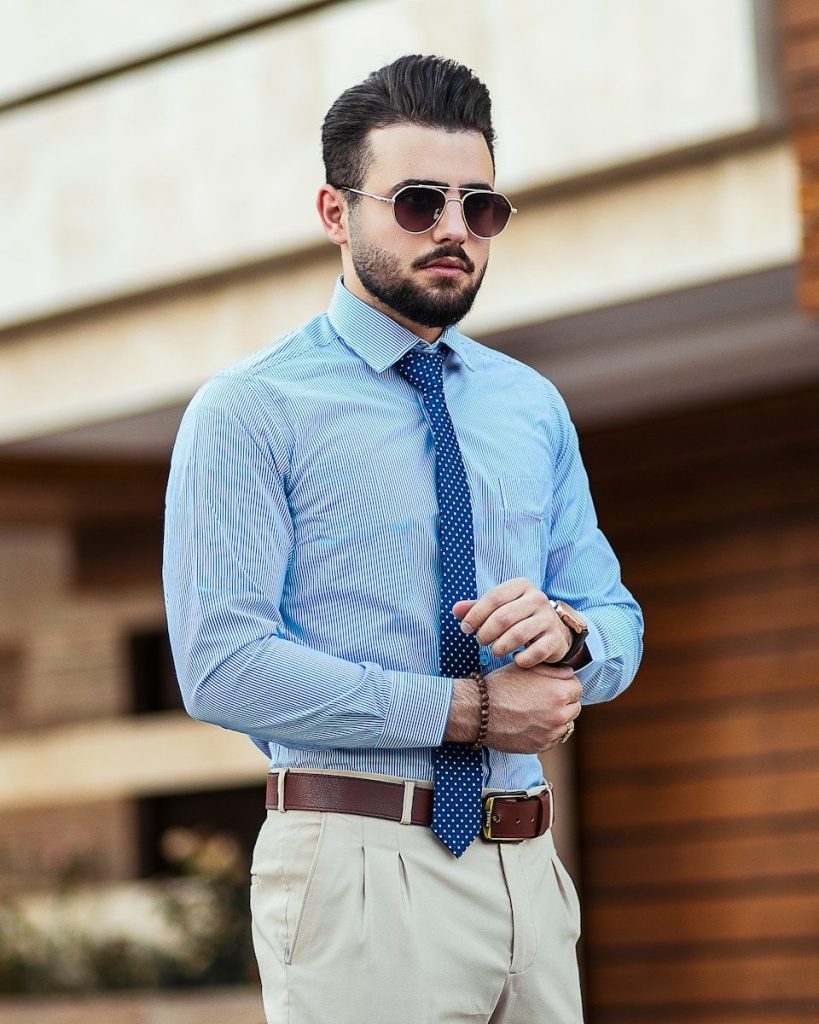
For a formal outfit, keeping your belt and shoes in the same colour family is a reliable approach. A black belt with black dress shoes creates a clean finish, while dark brown can bring warmth to navy or grey tailoring.
There is no need to find two items in precisely the same shade. A little variation can look natural, especially when the finishes have a similar level of formality.
Casual dressing allows more freedom. A brown belt can sit comfortably between olive chinos and off-white trainers, even though it matches neither exactly. With dark jeans and black boots, a black strap repeats the colour of the footwear without adding another shade at the waist.
Start with the footwear you wear most. If almost every pair is black, a tan belt is unlikely to be your most useful first purchase, however appealing it looks on its own.
Pay attention to the buckle
A buckle sits near the centre of an outfit, so its scale deserves attention. Try viewing it with your shirt tucked in and your jacket open, rather than judging it separately.
For tailoring, a modest frame buckle is an easy choice. Silver-toned hardware can feel crisp against cool colours, while warmer metal finishes can complement brown, cream and earthy shades. Coordinating it loosely with a watch is an option, though every metal detail does not need to match.
A larger buckle can work with jeans, boots and a heavier overshirt. With lightweight trousers and a fine knit, the same piece may draw more attention than you want. Choose it deliberately if it is intended to be a focal point.
Choose the material and finish
Surface texture matters as much as colour. A smooth, understated strap works well with fine wool, while a grained, woven or suede-like finish can complement the heavier texture of chinos and denim. Look for neatly finished edges, secure hardware and clear information about the material.
If you prefer to avoid animal leather, Doshi’s men’s vegan belts include the Professional 4 dress belt, which pairs a microfiber-based vegan leather strap with a polished stainless steel buckle. The brown version would work with navy trousers, a pale blue shirt and brown loafers; black would suit charcoal trousers and black dress shoes.
Assess each design individually: an animal-free material does not, by itself, tell you how well a belt is made. Check the care guidance before buying, too, rather than assuming a vegan material needs the same treatment as animal leather.
Get the length right
A belt should fasten comfortably and leave enough strap to sit neatly through the keeper, without a long tail wrapping around your waist. If you need to pull it tight to stop the trousers slipping, it is worth checking the trousers’ fit as well.
Follow the maker’s measuring instructions instead of relying entirely on your trouser size. Brands may label belt lengths differently, and a waistband worn lower on the hips needs a different measurement from one worn higher.
Measure a belt that already fits if the brand’s guide allows for it. Check where its measurement starts and ends; total strap length and the distance to a fastening hole are not interchangeable.
Build around the outfits you actually wear
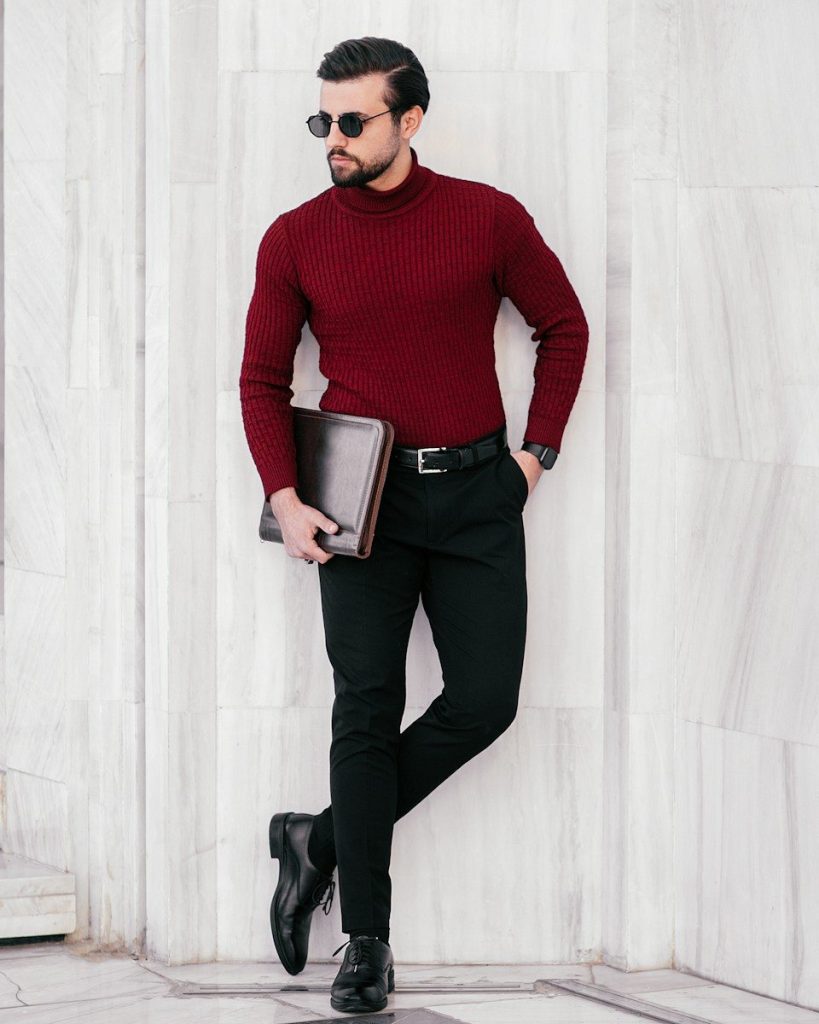
You may get more use from two carefully chosen belts than from several that serve the same purpose. A restrained black or dark brown dress belt can cover smarter occasions, while a slightly wider, textured option can handle chinos and denim.
Try each with clothes you already own before adding another. Look at the full outfit, sit down and move around. Check that the buckle sits flat, the strap feels comfortable and the end stays neatly in the keeper. If it works with several outfits you wear regularly, it has earned its place in your wardrobe.
You may also be interested in
The Ultimate Men's Haircare Guide for Beginners
Introduction to Men's Haircare: Why It Matters Many men often overlook the importance of proper…
READ MORE
Stylish Italian Leather Briefcases for Men
A briefcase… yeah, it’s one of those things people clock instantly, whether they mean to…
READ MORE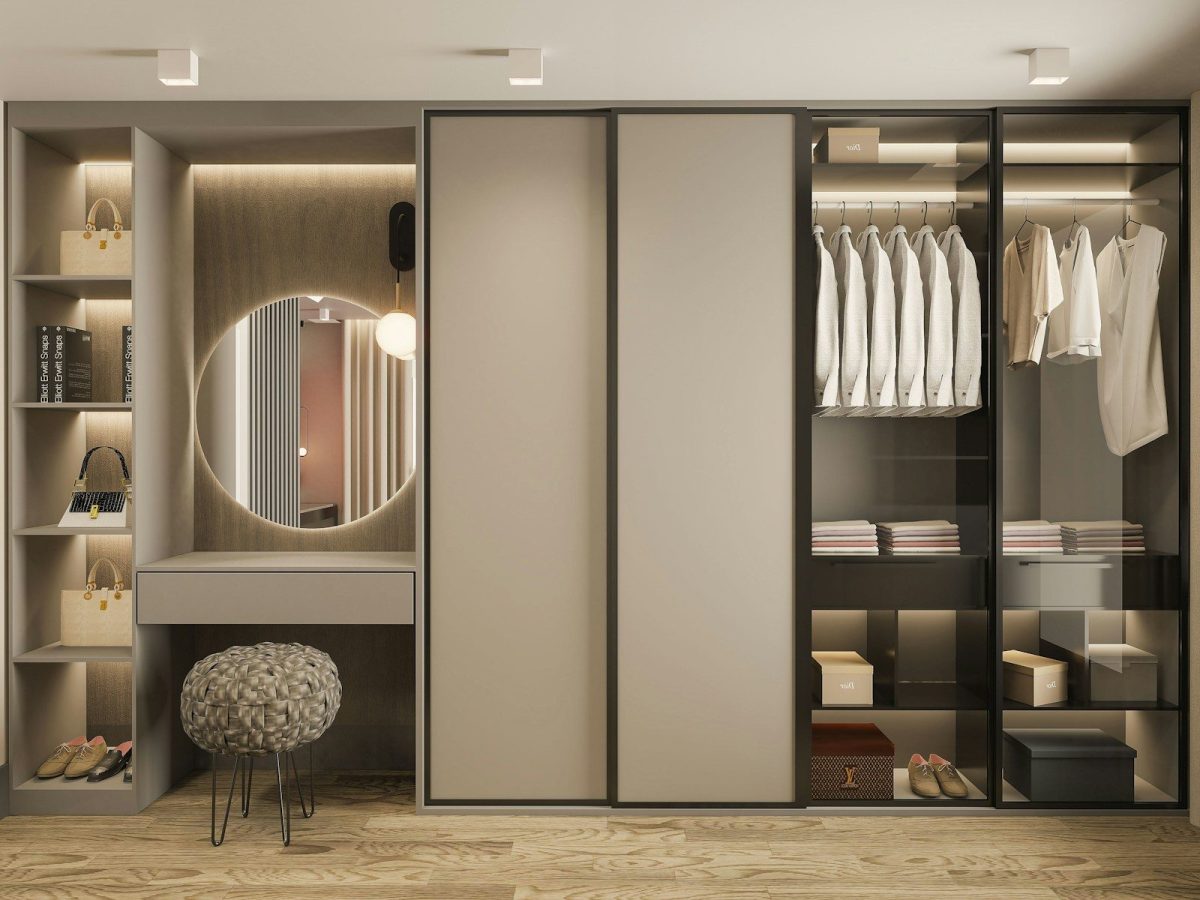
The Architecture of the Wardrobe: When Form Extends Beyond the Garment
In Italian culture, style begins with proportion. The silhouette, the shoulder line, the balance of…
READ MOREDiscover more from MilanoStyle.com
Subscribe to get the latest posts sent to your email.