

Get our free newsletter about Italy, travel and style. Get updates, news and articles straight to your inbox. Subscribe.
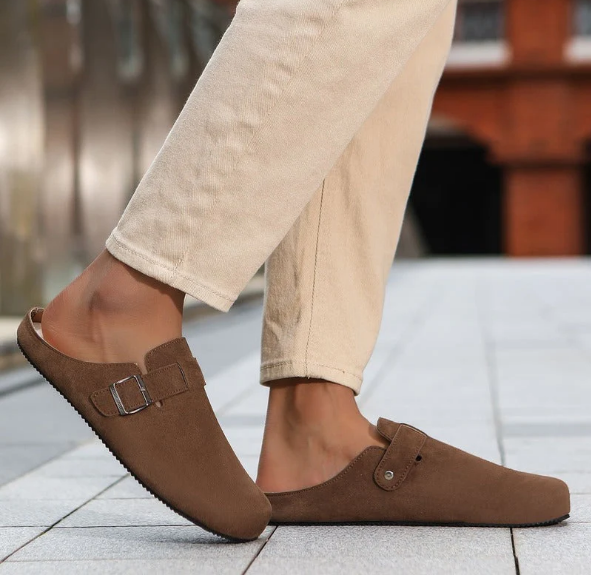
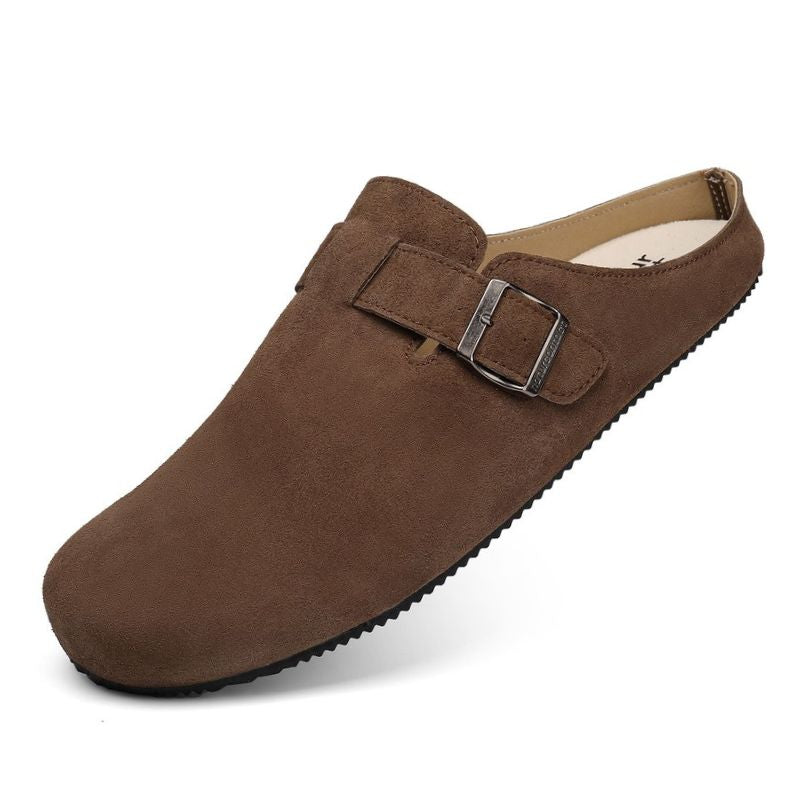
Most men who buy their first pair of minimalist footwear expect the adjustment to be physical: a different feel underfoot, maybe some soreness in the calves during the first weeks. What they don't expect is how many everyday habits shift as a side effect. Choosing barefoot shoes for men turns out to change far more than the sensation of walking. It changes posture, gait, even the way a man stands still while waiting for a train.
In this article
The standing posture nobody notices
Conventional shoes with an elevated heel push the body's weight forward, and the body compensates by adjusting the pelvis and lower back to stay balanced. This happens automatically, without conscious effort, which is precisely why it goes unnoticed for years. A flat, zero-drop sole removes that forward tilt entirely. The pelvis settles into a more neutral position, and the compensations built up over years of elevated heels start to unwind, sometimes slowly, sometimes within days.
Men who make the switch often report a subtle but persistent difference in how their lower back feels at the end of a long day standing. It isn't dramatic. It's the kind of change that becomes obvious only in hindsight, once the old sensation of tightness stops showing up.

Walking speed and stride length
A second habit that shifts quietly is stride. Cushioned shoes with a raised heel encourage a heel-first landing, which in turn tends to lengthen the stride and push the point of impact further from the body's centre of gravity. Minimalist footwear favours a shorter, quicker stride with the foot landing closer to underneath the hips, which is mechanically more efficient and puts less strain on the knees over the course of a day.
This isn't something most men consciously decide to do. It happens because the foot, freed from a thick cushioned platform, naturally finds the landing pattern that hurts the least. Given the right footwear, the body tends to correct itself.
Balance on uneven ground
Anyone who has walked across a gravel path or a cobbled street in a stiff-soled shoe knows the sensation of the ankle working overtime to stay stable. Barefoot footwear removes the disconnect between the sole and the surface. The foot receives direct feedback from the ground, and the small stabilising muscles that conventional shoes leave dormant get called back into service.
Over weeks, this tends to translate into noticeably better balance, not just in barefoot shoes but generally. It's one of the more practical, if underappreciated, benefits for men who spend time on trails, building sites, or simply uneven pavement.
The mental shift: paying attention to the feet again
There's also a less physical, more behavioural change. Men who wear heavily cushioned shoes for years tend to stop thinking about their feet at all, the shoe does the work, the foot goes along for the ride. Barefoot footwear reverses this. Every step provides information, and men who adopt this kind of shoe often become more attentive to how they walk, where they place their weight, and how their feet actually feel.
This attentiveness has a practical upside: problems get noticed earlier. A blister forming, a patch of tightness in the arch, uneven wear on one side of the foot, these signals are much easier to pick up on when the foot is in direct contact with feedback from the ground, rather than muffled by several centimetres of foam.
Common concerns worth addressing honestly
Not every change is instantly comfortable, and it's worth being upfront about that. Calf tightness in the first two to three weeks is common and expected; it reflects the Achilles tendon adjusting to a flatter platform after years of being shortened by heeled shoes. This settles with gradual use, not by forcing full days in minimalist shoes from day one.
Men with pre-existing foot conditions, or with a history of injury, should introduce barefoot footwear slowly and pay attention to any pain that doesn't resolve with rest. For the vast majority of healthy adult feet, though, the transition is a matter of patience rather than risk.
Choosing the right pair for daily use
Not all minimalist shoes are built the same, and the differences matter more for daily wear than for occasional use. Look for a genuinely flat sole with no heel elevation, enough width in the toe box to allow the toes to spread naturally under load, and a flexible construction that bends where the foot bends, not where the manufacturer decided it should.
The best barefoot shoe is the one that disappears from conscious thought after the first few weeks, when the foot has adapted and walking simply feels normal again, only better informed by the ground underneath it.
Discover more from MilanoStyle.com
Subscribe to get the latest posts sent to your email.