

Get our free newsletter about Italy, travel and style. Get updates, news and articles straight to your inbox. Subscribe.
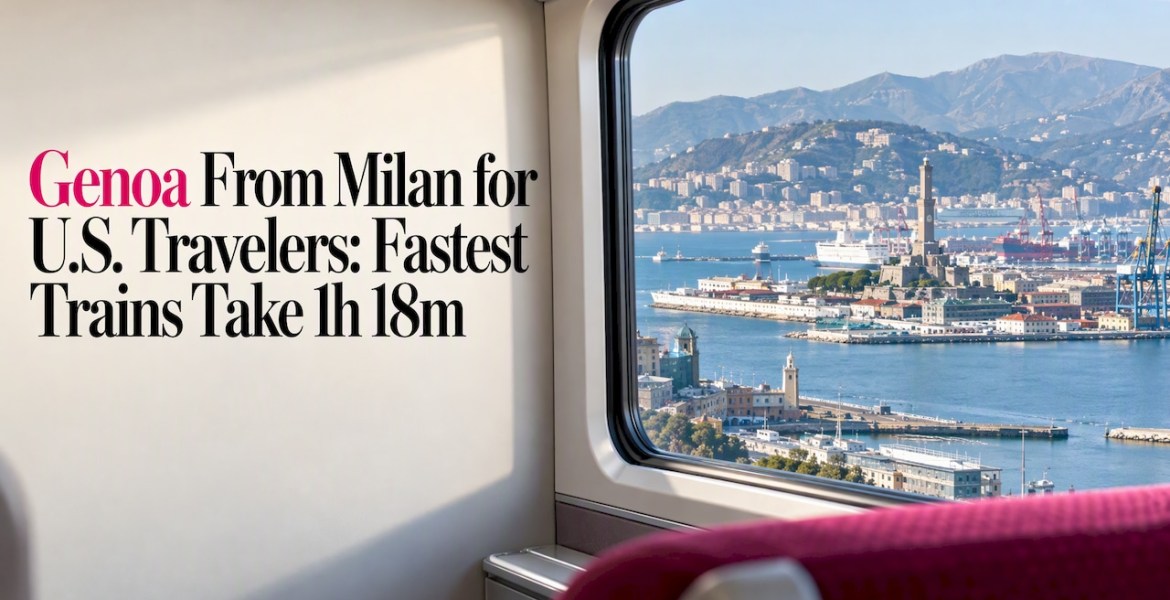
Trains are the best way to reach Genoa from Milan: the fastest services take about 1h 18m, average journeys take around 2h 1m, and advance fares start around €6.90 before climbing on the day. Driving adds flexibility for multi-stop plans but brings tolls and parking. Coaches cost less and take longer.
TL;DR:
- Intercity trains can take about 1 hour 34 minutes; choose Piazza Principe for the harbor or Brignole for eastern shopping areas.
- Driving covers 144 km and costs about €11 in tolls, before fuel and parking; choose it for groups or planned stops along the way.
- Coaches usually cost less but take longer, run on fewer schedules, and may stop away from Genoa’s harbor, so check the arrival location before booking.
- Advance fares can be less flexible, so check refund rules; review service notices before departure because planned works may replace trains with buses.
Table of Contents
- Which way of getting from Milan to Genoa fits your day?
- How to take the train from Milan to Genoa
- Is the coach a good choice for Milan to Genoa?
- How to drive from Milan to Genoa
- Which Genoa station should you arrive at?
- What does a day in Genoa from Milan look like?
- What should you know before you go?
- Why we favor the train for Genoa
- Want a Genoa day plan built for you?
- FAQ
- Sources
Which way of getting from Milan to Genoa fits your day?
Four options cover almost every traveler. The right pick depends on how much you value speed, price, and freedom once you arrive.
- Train: Typically about 1h 40m to 2h, with the fastest runs near 1h 18m, according to aggregated journey planners. Fares are lowest when booked early and rise as departure nears. Departures are frequent through the day, and both regional and faster intercity services run the route. Best for: most solo travelers, couples, and anyone who wants to arrive rested and walk the old town.
- Car: About 144 km on the A7 motorway, with a free-flow time near 1h 46m and tolls of roughly €11, per a driving route guide. Fuel and parking in Genoa come on top. Best for: groups splitting costs, families with gear, and anyone adding a stop such as Pavia or an outlet on the way.
- Coach: Coach services are a viable alternative, usually with lower fares and longer journey times than the train. Departures are tied to a smaller set of schedules. Best for: budget travelers who don’t mind a slower ride and have flexible hours.
- Private transfer or guided tour: Door-to-door comfort, a guide who handles the logistics, and often a Portofino add-on. These tours commonly run 12 to 13 hours including transport. Best for: travelers who want zero planning and a curated route.
Our recommendation for day-trippers is simple. Take the train if you are traveling alone or as a pair, take the car if you are a group or want to wander beyond the city, and take the coach if the budget is the deciding factor. A private tour makes sense when comfort and a guide matter more than the lowest price.
One practical point decides many trips: the train drops you in the middle of the action. Driving into Genoa means narrow streets, limited traffic zones, and paid parking. If your plan is the Aquarium, the harbor, and the old alleys, the train removes most of the friction.
How to take the train from Milan to Genoa
Trains are the backbone of this trip, so it pays to understand how the service works before you buy.
Service types and frequency
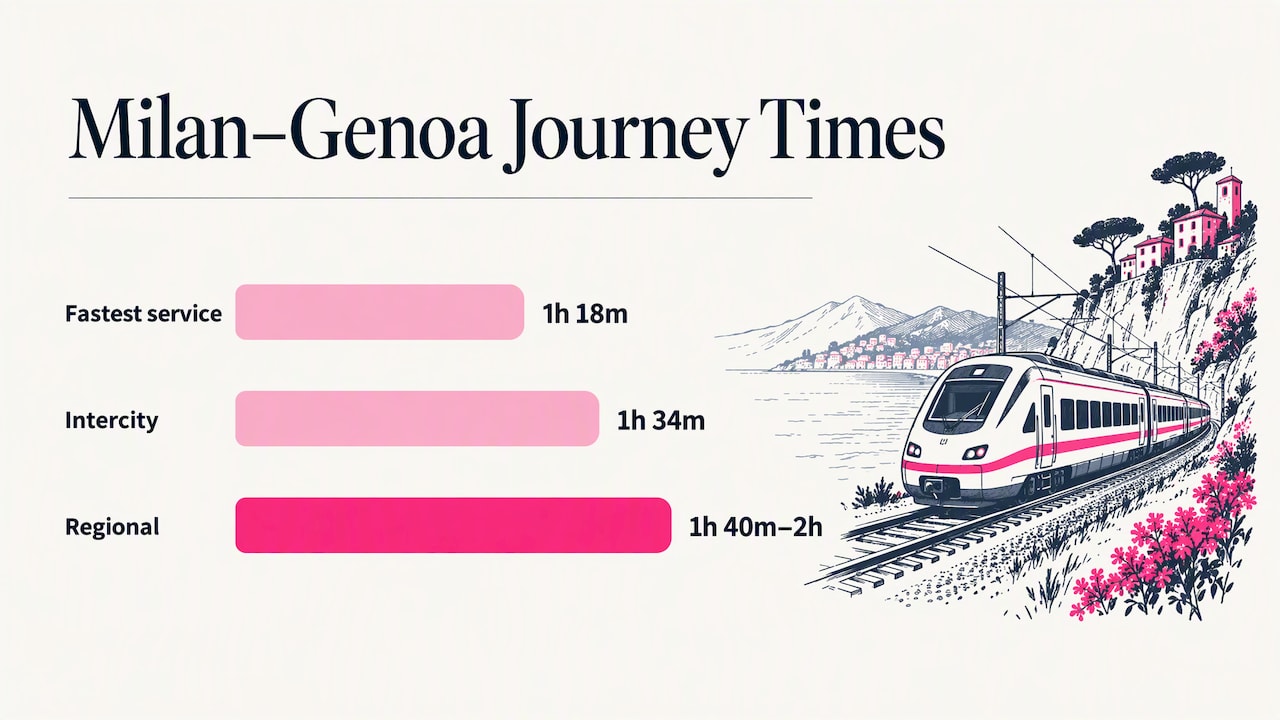
Both regional and faster intercity or high-speed services run the corridor. Trenitalia promotes up to about 30 daily Intercity connections between Milan and Genoa, and online platforms that list several operators show many direct services every day. Intercity runs can take roughly 1h 34m, while the fastest runs reach about 1h 18m. Regional trains stop more often and sit at the longer end of the 1h 40m to 2h range.
For a day trip, pick the quickest direct service that suits your window. A fast morning outbound and an early evening return give you a full day on the ground.
Departure and arrival stations
Most travelers leave from Milano Centrale, the city’s main terminus, which suits the fast services. In Genoa you have two main choices, and they put you in different parts of town. Genova Piazza Principe is generally closer to the Aquarium and Porto Antico, while Genova Brignole is better for eastern shopping areas and parts of the modern city. We cover that choice in detail further down.
What it costs
Online planners report tickets from about $9.28, and the operator Italo advertises fares starting at €6.90. Those are the low advance prices. Waiting until the day of travel usually costs more, and the gap widens on popular weekend and summer departures. Travel experts consistently recommend booking in advance to lock in lower fares and guaranteed seats.
Buying your ticket
- Compare options first. Check an aggregator and the operators’ own sites to see times and prices side by side.
- Choose the departure station and time. Confirm Milano Centrale and your Genoa arrival station before you pay.
- Pick a fare class. Cheaper advance fares are often less flexible, so read the change and refund terms.
- Reserve a seat where offered. Seat reservations matter on busy days and on faster services.
- Save the ticket on your phone. Keep a screenshot in case the signal drops at the station.
Pro Tip: Check the operator’s service advisories a few days before you travel, since planned works can change timetables.
Planned works and disruptions
Infrastructure work on the line can change timetables and sometimes bring replacement buses. Before booking a specific train, look at the operator’s works notices for your travel date. If your preferred service is affected, switch to another departure rather than gambling on a connection.
If you prefer a rail-first approach to northern Italy more broadly, our guide to Milan and the lakes by train without a car shows how far a rail pass of ideas can stretch.
Is the coach a good choice for Milan to Genoa?
Coaches are the budget route. They trade time for a lower fare, and they suit travelers whose schedules are loose enough to absorb a slower journey.
- Journey time and price: Coaches generally take longer than trains and cost less, as coach walkthroughs for this route indicate. Expect the saving to be real but the clock to run longer, especially in motorway traffic around Milan.
- Where you board: Coaches commonly leave from Milano Centrale or another major coach station in Milan. Confirm the exact stop on your booking, since coach stations in large cities can sit away from the rail terminal.
- Where you arrive: Genoa coach drop-offs vary by operator. Check the arrival point and how far it is from the harbor and old town before you commit.
- Booking and comfort: Reserve through the operator or a booking platform. Coaches usually allow a bag in the hold and a small one at your seat, which is more forgiving than a crowded regional train, though space is not unlimited.
- When coaches make sense: Choose one if the fare is the priority, if the trains you want are sold out, or if a very early or very late departure fits better with your plans.
For most day-trippers, though, the extra time on a coach eats into your hours in Genoa. If you only have a single day, the train usually wins.
How to drive from Milan to Genoa
Driving gives you control over your timing and the freedom to add stops. It also asks more of you in cost and attention.
- The route: Take the A7, the Autostrada dei Giovi. Genoa’s own traffic information recommends the A7 with the Genova Ovest exit toward the city center. The road crosses the Apennines, so expect tunnels, bends, and heavier trucks than on a flat motorway.
- Time: Free-flow driving takes about 1h 46m, though traffic out of Milan and into Genoa can add to that.
- Tolls: Motorway tolls are distance-based. Budget about €11 for the run.
- Fuel: Add fuel for roughly 144 km each way, plus the cost of the return leg. Rental cars also carry insurance and pickup logistics.
- Parking and zones: Parking in Genoa is limited and paid, and historic centers restrict traffic. Check the rules for the area you plan to enter before you leave, and use a car park outside the old town if needed.
Driving the A7 from Genoa to Milan covers about 144 km with a free-flow time near 1h 46m and tolls around €11, according to a route guide. That makes it competitive on time with the train, but the toll, fuel, and parking add up.
A car shines when you want a scenic detour. Our feature on a stylish road trip from Milan to Genoa through Pavia and Serravalle maps a route with stops, and our guide to the Serravalle outlet helps if shopping is part of your day.
Which Genoa station should you arrive at?
Genoa has two main rail stations, and picking the one nearest your first stop can save you a surprising amount of walking and transfers.
- Genova Piazza Principe: According to everyrail.com, this station is generally closer to the Aquarium and Porto Antico. If your day centers on the harbor, the Bigo lift, and the old alleys, arrive here.
- Genova Brignole: This station suits the east side of the city, including shopping areas and parts of the modern center. Choose it if you plan to browse the shops before heading to the waterfront.
- Check your ticket: Confirm the arrival station when you book. Some trains serve both, and some stop at only one, so the name printed on your ticket matters.
- Moving between stations: If you arrive at one and want the other, local transit and taxis connect them. Keep a little buffer in your schedule for the transfer.
- Save minutes: Decide your first and last stops, then choose the station that puts you closest to them. A short walk beats a bus ride you have to wait for.
For a classic first-time itinerary built around the harbor and the historic core, Piazza Principe is the natural choice.
What does a day in Genoa from Milan look like?
Genoa rewards a well-paced day. Wikipedia describes a historic center that is among Europe’s largest medieval districts, with the Aquarium of Genoa, the Bigo panoramic lift, and the UNESCO-listed Palazzi dei Rolli. Travelers typically spend their time in Porto Antico, in the narrow alleys known as caruggi, and along Via Garibaldi. Forbes writers have called Genoa an underrated gem, and the alleys do offer a striking contrast to Milan’s grand avenues.
Here is a sample plan that matches a typical morning train out and an evening train back.
- 8:00 AM, depart Milano Centrale. Take a direct fast service so you arrive in roughly 1h 20m to 1h 40m.
- 9:45 AM, arrive at Genova Piazza Principe. Drop any small bag, grab a coffee, and walk toward the old town.
- 10:00 AM to 12:00 PM, Via Garibaldi and the Palazzi dei Rolli. Spend about two hours admiring Renaissance palaces and visiting any palace that is open.
- 12:00 PM to 1:30 PM, lunch in the caruggi. Eat where the alleys are busiest with locals, and try focaccia or a plate of pesto pasta.
- 1:30 PM to 3:30 PM, the Aquarium and Porto Antico. Allow about two hours at the Aquarium, then stroll the waterfront.
- 3:30 PM to 4:30 PM, the Bigo lift and harbor views. Take the panoramic lift for a view over the port.
- 4:30 PM to 6:00 PM, free time. Revisit a favorite alley, shop, or sit with an espresso.
- 6:00 PM to 7:30 PM, return train to Milan. Choose a departure that leaves a comfortable buffer.
Pro Tip: Pre-book your Aquarium ticket for a fixed time slot, and eat lunch before or after your visit to avoid the midday rush.
Shorten it: Skip the Aquarium or the Bigo, and spend more time on Via Garibaldi and lunch. That version fits a later start or an earlier return.
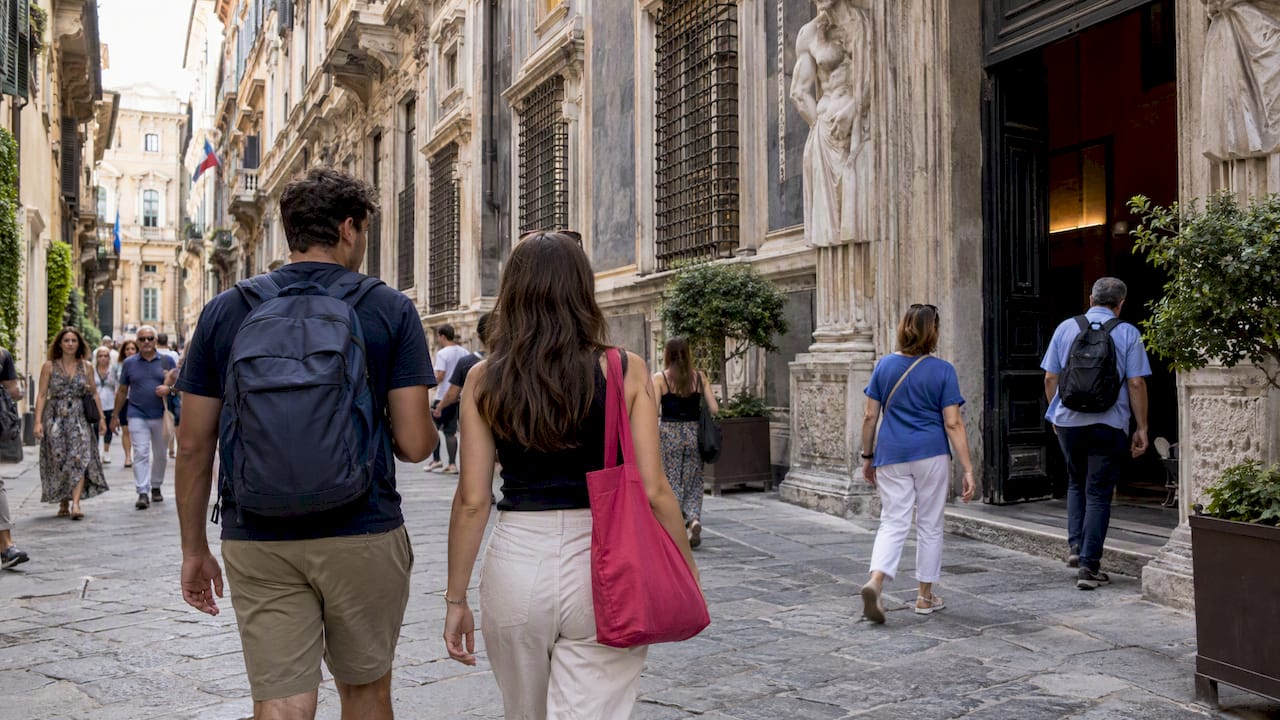
Lengthen it: If you can stay later, add a longer wander through the caruggi and a slow dinner. Guided tours that combine Genoa with Portofino run 12 to 13 hours, so a private plan can stretch the day further.
What should you know before you go?
A few habits cut stress and save money.
- Book early: Advance fares are the cheapest, and seats on faster trains are limited on busy days. Operators release tickets well ahead of travel, so buy as soon as your dates are firm. Experts recommend advance booking for both lower fares and guaranteed seats.
- Travel light: A day trip needs a small bag. If you must carry more, our guide to luggage storage in Milan explains how to leave bags behind. In Genoa, ask about storage near the station before you set out.
- Accessibility: Request assistance with the rail operator ahead of time if you need help boarding or changing platforms. Check that your route has step-free access at both stations, and ask about lifts and ramps if you use a wheelchair or a stroller.
- Plan for disruptions: Planned works and unplanned delays happen. Look at operator notices before you leave, keep a second train time in mind, and know that a replacement bus may substitute for a train on affected dates.
- Compare sources: Because several platforms list multiple operators on this route, compare times and prices across them before you pay.
Why we favor the train for Genoa
We spend our days thinking about how visitors move through Milan and beyond, and we have a clear bias on this route: the train, booked early, almost always gives you the most Genoa for your time. The temptation is to chase the cheapest fare or the most flexible plan, but a day trip is won or lost on how many unhurried hours you have in the old town. A slow coach or a car stuck in traffic quietly spends those hours for you. The same goes for over-planning. Genoa is a city of alleys and viewpoints, and a loose schedule with two or three anchors beats a rigid checklist.
At MilanoStyle, we are a Milan travel and style guide, and we curate itineraries and local tips with U.S. travelers in mind, from where to stay to how to move between cities.
— Celia
Want a Genoa day plan built for you?
If you would rather not juggle timetables, stations, and tickets, we can do it for you. Our Personalized Italy Itinerary and Travel Consultation turn this guide into a plan tailored to your dates, pace, and interests.
- Time saved: We help you plan your day so you spend your hours in Genoa, not on your phone.
- Insider routes: You get local recommendations for where to eat and what to prioritize, based on how long you have.
- Booking help: We guide you on when and how to reserve.
A Travel Consultation is 75 € per hour. Custom itineraries carry an additional fee of 35 € per day planned. You can also read about the Personalized Italy Itinerary service and send us your dates. Tell us when you want to go, and we will build the day.
FAQ
Is Genoa worth visiting from Milan?
Yes, Genoa is well worth a day trip. It has one of Europe’s largest medieval historic centers, the Aquarium, the Bigo panoramic lift, and the UNESCO-listed Palazzi dei Rolli. Its narrow alleys also offer a very different feel from Milan.
How long does it take to drive from Genoa to Milan?
Driving between the two cities takes about 1h 46m in free-flow conditions, according to a route guide. Expect more time in traffic around either city. The A7 is the main route.
What is the cheapest way to get from Milan to Genoa?
Advance train tickets and coaches are usually the lowest-cost options. Operators advertise train fares from €6.90 when booked early. Compare prices across platforms before you buy.
Which Genoa train station should I choose?
It depends on your first stop. Genova Piazza Principe is generally closer to the Aquarium and Porto Antico, while Genova Brignole suits eastern shopping areas. Check the arrival station on your ticket.
Sources
- En
- Milan to Genoa by Train from $9.28 | 1h 39m Journey | Trainline
- Driving from Genoa to Milan: A Route Guide
- Everyrail
- Thetrainline
Recommended
- Milan and the Lakes by Train: A Stylish Week in Northern Italy Without a Car
- Tour: Lake Como & Bernina Scenic Train (Daily Departures)
- From Milan to Genoa: A Stylish Road Trip Through Pavia and Serravalle
- Luggage Storage in Milan: Travel Light and Discover More
Written with the help of BabyLoveGrowth
Discover more from MilanoStyle.com
Subscribe to get the latest posts sent to your email.