

One of the most colorful and fun celebrations in Italy is undoubtedly the Carnival (Carnevale). Carnival is a festival of Christian and Catholic origins, but with more ancient pagan origins. Usually the Carnival party falls between February and March, it depends on the date of Easter.
However, celebration dates vary as there is a difference between the Roman rite and the Ambrosian rite.
The most important days are Shrove Thursday and Shrove Tuesday, the latter preceding Ash Wednesday which indicates the beginning of Lent, the fasting period. Shrove Thursday and Shrove Tuesday are the two days that respectively mark the official start and end of the Carnival.
According to the Roman rite, Carnival is celebrated the Sunday following Shrove Thursday, while in the Ambrosian rite, Carnival is celebrated the Saturday following Shrove Tuesday and Ash Wednesday.
 Carnevale in Italy
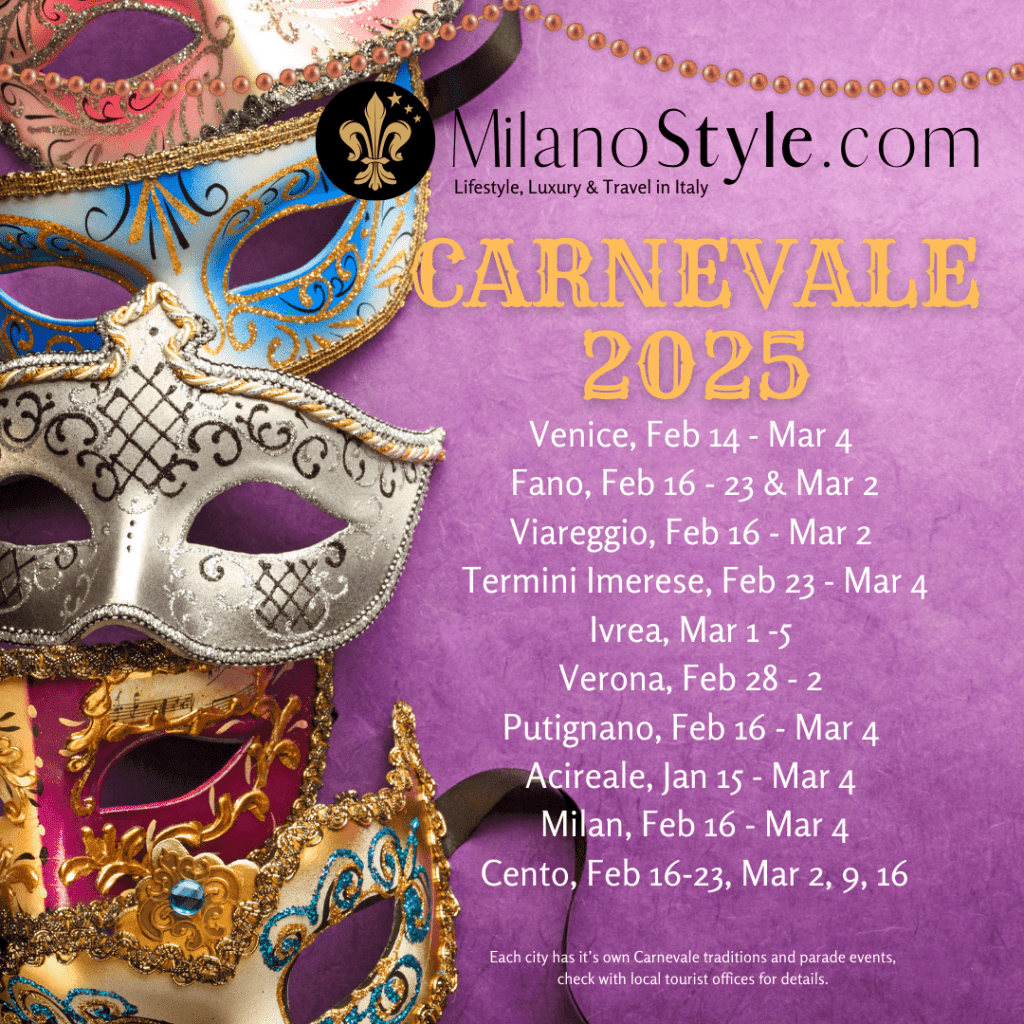 Carnevale in Italy
In every Italian city the Carnival is celebrated and each has its particular customs and traditions: the parades of floats, confetti, streamers, masks, typical costumes and traditional sweets of this festival. Certainly the Carnival of Venice and Viareggio are the most famous in the world. Also famous are the Battle of Oranges of the Ivrea Carnival and in the province of Ferrara the Carnival of Cento, famous for its papier-mâché floats. But also those of Arcireale, Fano and Putignano have international relevance.
Venice Carnevale
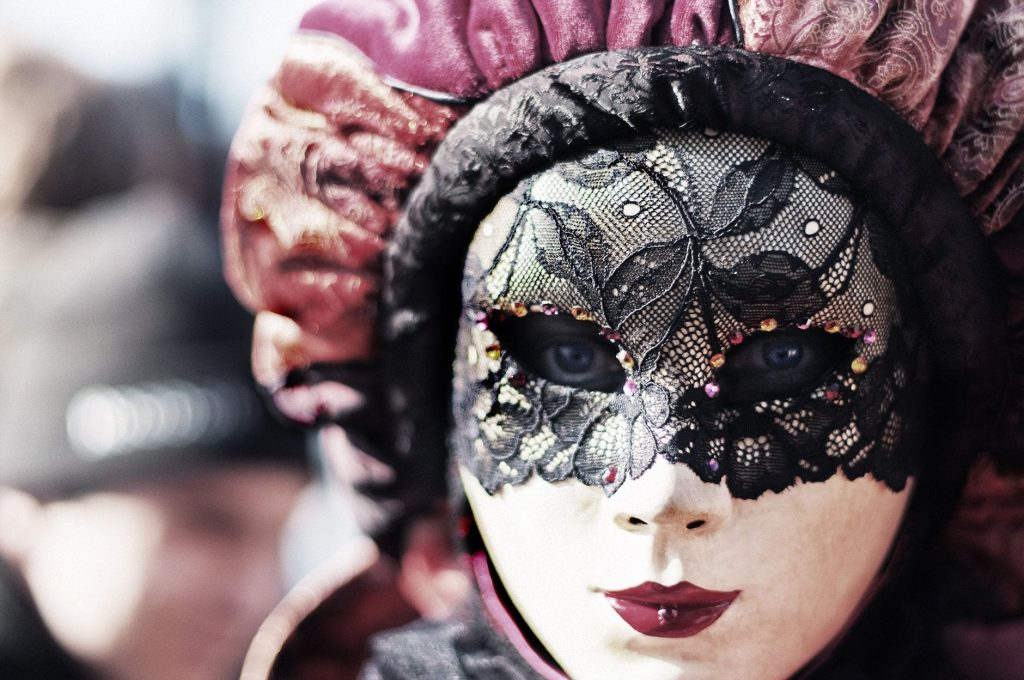
The Carnival of Venice is certainly among the most fascinating and elegant carnivals in the world. It has its roots in the era of the Republic of Venice and has enchanted ever since with fine art masks. The historical Venetian masks usually cover the whole face and are accompanied by huge cloaks and eighteenth-century clothes. The Venice Carnival opens every year with the historic Venetian Festival on the water in which the Rio di Cannoregio comes alive with the masked parade on gondolas.
Milan Carnevale
The Ambrosian carnival in Milan is does not follow the Roman rite but the Ambrosian rite. According to this rite, Lent does not begin with Ash Wednesday, but the following Sunday, making the last day of Carnival a Saturday. It's a full immersion 3 Day Carnival experience in Milan. The Milan Carnival takes its name from Sant ‘Ambrogio, bishop and patron of Milan, who, being out of the city for a pilgrimage, asked to postpone the end of the carnival by 4 days just to allow him to return in time to start to the liturgical rites of Lent.
Other Carnival Festivals in Italy
Carnival celebrations in Italy extend beyond the famous Venetian masks and gondolas; they are a festive tapestry woven with a myriad of local traditions across the country.
One enchanting festival is the Carnevale di Viareggio in Tuscany, which is renowned for its grandiose parades featuring gigantic paper-maché floats. This month-long party attracts hundreds of thousands of spectators who come to marvel at the intricate designs that often include caricatures of popular politicians and celebrities.
In the alpine region of Valle d'Aosta, the Carnevale di Ivrea is unique for its historic Battle of the Oranges. This event symbolizes the fight for freedom and features townspeople divided into teams, engaging in a playful citrus-throwing combat that commemorates the rebellion against tyranny.
Heading south, Carnevale di Putignano claims the title of being one of the oldest carnivals in Europe. It carries a reputation not only for its longevity but also for its satirical floats and the ritual of the “funeral” of the carnival, marking the end of the festivities.
Further down, in the region of Campania, the Carnevale di Termini Imerese in Sicily offers a distinctive experience with its allegorical floats and traditional folk dances. Unlike other carnivals, it features a “King of the Carnival,” whose effigy is burned in a public square on the last day, symbolizing the burning of winter and the welcoming of spring.
These regional celebrations are just glimpses into the vast array of carnival festivities that Italy has to offer, each with its own local flavor and ancient origins, reflective of the rich cultural diversity that defines the Italian peninsula.
Carnevale Masks & Costumes

Among the symbols of the carnival, masks inspired by the Italian tradition of puppet making and the theater. Among the most famous masks are those of Rugantino, in Rome, coming from the puppet theater, which is a caricature of the typical Roman citizen. In Milan there is the Meneghino mask from the popular theater. The mask of Stenterello is typical of Florence; this character embodies the fun-loving personality of the Florentines. In Bologna the most famous mask is Doctor Balanzone, a presumptuous and pedantic professor. Finally, we have the mask of Gianduja, with his wife Giacometta, symbol of the city of Turin, both originating from the puppet theater.
Very famous and well known are also the masks of Harlequin of Bergamo and the Pulcinella of Naples, both emblems of the carnival all over the world. Not to forget, the masks of the Venice carnival, such as the Pantalone and his partner Colombina and Bartoccio the typical mask of the city of Perugia. Finally we have Farinella, the jester of the Putignano carnival, in Puglia.
Carnevale Treats
Of course, at Carnival you cannot miss the typical sweets of the tradition. Every city in Italy has its own customs, traditions and masks, and each one has typical sweets and treats prepared for the occasion. The most famous desserts of Carnival are “castagnole”, “zeppole” and “chiacchiere”, traditional sweets available in most of Italy (albeit sometimes they have different names).
Chiacchiere

Chiacchiere (pronounced KIA-kia-rey) – Chiacchiere means “gossip”.
A Carnival treat that's hard to resist is a light pastry, often likened to a sweet cloud thanks to its airy texture. It is typically fried to a golden perfection, which creates a delightful contrast between the crunchy exterior and the soft, fluffy inside. Once they're just right, they're taken out of the oil and given a moment to cool off before being generously sprinkled with powdered sugar.
Alternatively, for those with a penchant for something a little more luxurious, the pastries might be glazed with a glossy coat of rich chocolate. It's common for these treats to be displayed in the window of bakeries and pastry shops during Carnival time, tempting passersby with their sugary allure. They're an integral part of the festivities, embodying the spirit of indulgence and celebration that Carnival is all about.
Whether one opts for the classic dusting of sugar or the decadent chocolate glazing, these pastries are a beloved staple of this festive season. Like confetti in the streets and the sounds of joyful music, they're a sign that Carnival is here, bringing with them the promise of sweet memories and shared delights.
Bugie di Carnevale

Bugie di Carnevale – Bugie means “lies” . These are fluffy, fried pastry filled with pastry cream and sprinkled with sugar.
If you are in Italy during the Carnevale period be sure to experience the vibrant festivities firsthand. Carnevale, or “Carnival,” is a grand celebration that occurs before Lent, filled with parades, masquerade balls, entertainment, music, and parties. It's a time for locals and travelers alike to indulge in rich Italian foods, from sweet pastries to savory dishes, and to participate in the joy and revelry. The festivity is especially renowned in the city of Venice, where the Carnevale di Venezia transforms the city into a magical spectacle of color and mystery. Be sure to live a little piece of this unique cultural experience, as it is an unforgettable part of Italy's rich tradition and heritage.
Subscribe to our Free Newsletter
Subscribe to get the latest news, updates, and invitations.
Discover more from MilanoStyle.com
Subscribe to get the latest posts sent to your email.
