

Sustainable fashion means that garments have been made mindful of the environment and respect workers’ rights and dignity. Small independent companies like Dampaì and Titanic Jeans are making headway as sustainable fashion companies, but what about the big companies that we already know and love?
What about the brands we see in the boutiques and outlets in Milan?
Can companies like Levis, Adidas, and Guess offer sustainable fashion?
In this article, we look at sustainable fashion and what these big brands are doing to be environmentally friendly and sustainable. All brands mentioned are easily available online, at flagship stores and at outlets such as Serravalle Designer Outlet.
Fashion & Sustainability
Fast and Slow Fashion
Customers are becoming more aware and mindful about what they buy, and they are using their voices to make a positive impact on the people involved in the production of clothing and other products.
The term “fast fashion” refers to inexpensive, fashionable, mass-produced clothing with a negative environmental impact. Because of their affordability and style, these garments are popular with consumers. Clothes like these are quickly thrown away in landfills because they aren’t made to last and are out of fashion very quickly.
Consumerism and globalization of manufacturing during the ’70s, ’80s and 90s made “fast fashion” easily accessible, and the market was hungry for it. Large companies started outsourcing production to markets where labor and raw materials were inexpensive to protect profit margins. In many cases, laws and regulations protecting workers and the environment were never disclosed or were outright ignored.
The 2000s brought on a new era of awareness for human rights and environmental protection. A leading voice in the pursuit of sustainable fashion is Kate Fletcher, Professor of Sustainability Design & Fashion at the London College of Fashion. Over the last two decades, she has written several books on the fashion industry. Her original thinking and progressive outlook infuse the field of fashion, textiles, and sustainability with design and how to best approach the manufacturing process.
Fletcher is also known for coining the phrase “slow fashion,” used as the antithesis of fast fashion, and it has become the catchphrase to describe eco-friendly brands. The idea behind it is that eco-friendly brands use recycled and raw materials that may be labor intensive and take longer to produce, but the outcome will be a garment that will outlast trends and time.
An ethical approach to making apparel
One of the most critical components in creating sustainable fashion is the supply chain. A sustainable fashion supply chain integrates and coordinates a manufacturer’s activities and all its suppliers to achieve the highest level of efficiency and ethics while still making a profit.
Employee’s rights, working conditions and wages are also considered in sustainable manufacturing.
Fashion and the Environment
Environmental concerns regarding fashion production are CO2 emissions and water pollution. Transport from factories to retail outlets is mainly responsible for carbon emissions. According to the UN, the fashion industry contributes between 2% and 8.1% of global carbon emissions. Freshwater is contaminated during manufacturing due to the use of chemicals and dyes and plastic polymer fibers that break down easily during use and wash, damaging the environment. This is why the UNited nations has set up the Fashion Charter for Climate Action.
Big brands and sustainability
Because of voices like Fletcher’s and the mass environmental protection movement happening around the world, big brands must make some changes, or they will lose customers. So, what are fashion brands doing to protect the environment and their workers?
Levi’s
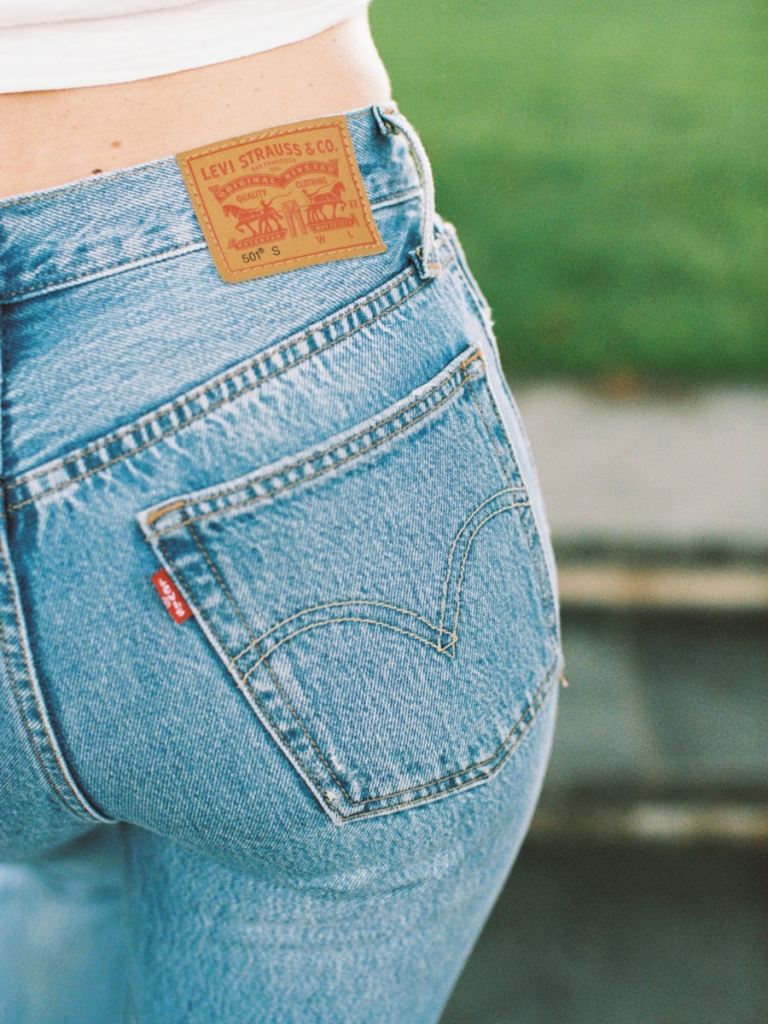
There is no dispute that Levi’s jeans last a long time and are often passed down from mother to daughter or father to son. However, the production methods and chemical dyes have been put under the microscope by critics.
Levi’s first sustainable jeans campaign exclaimed, “Buy Better, Wear Longer,” sending a conscientious message to raise awareness and move toward slow fashion. On their website, Levi’s acknowledge and commit to doing better , “There’s no denying it: the apparel industry has a frightening impact on the environment. Since our brand is part of it, it is up to us to do everything possible to create the fits you love with methods that respect the planet.”
It continues, “And, we confess … We haven’t always gone in the right direction. Being an extremely sustainable clothing brand is a goal that is close to our hearts, and we are still working on it. We have made great strides in several areas and are striving to improve in others, but there is still a long way to go. And we hope you will walk alongside us.”
Levi’s Circular and Wellthread collections are jeans made using organic cotton and Circulose, a material made from recycling worn-out old denim fabrics.
Levi’s deserves a standing ovation for facing the issue straight on and letting their consumers know it is a work in progress. Rather than just changing their slogans and messages, they are taking action to make their products eco-friendlier.
What Levi’s is doing to make eco-friendly and sustainable fashion
Various sources such as non-endangered plants and materials, including madder root extract and natural indigo, agricultural by-products like food remnants, and minerals such as clays, carbonates, and natural oxides are used to create the colors in the Levi’s® Fresh line. Cottonized hemp and organic cotton, as well as scaling water, are also part of this effort.
75% of Levi’s cotton comes from more environmentally friendly sources. Currently, 65% of their products are packaged in factories that use Worker Well-Being programs to ensure the safety and well-being of their employees.
They have also committed to promoting more sustainable production practices, reducing their own natural resource footprint, and aiding in delivering a more environmentally friendly clothing industry with the new campaign.
Adidas
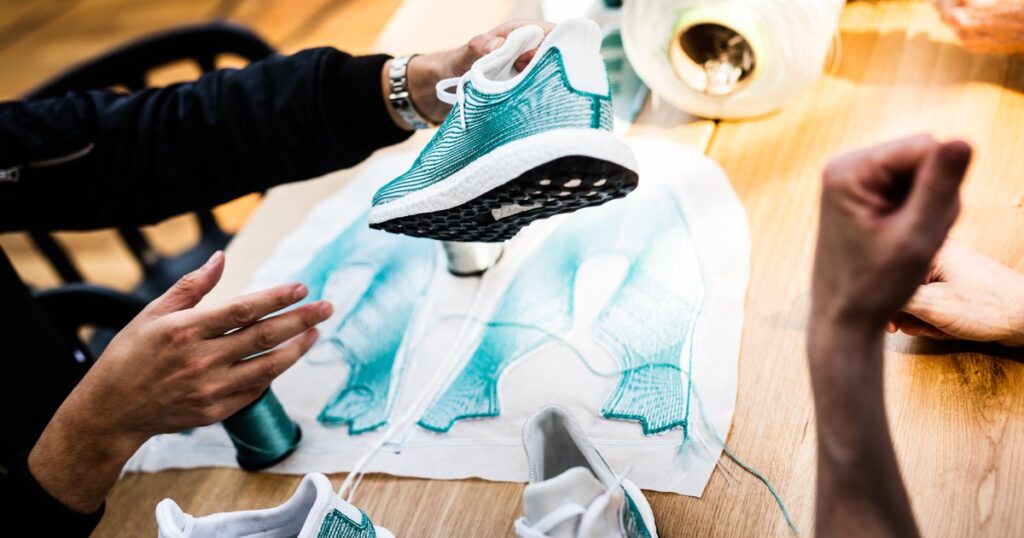
Every year, Adidas issue its annual Environmental Impact Report / Photo Adidas Press Office
Once a home-based business in Germany started by brothers Adolf and Rudolf Dassler in 1924, they made spiked running shoes with canvas and rubber. Adidas grew until a family argument split them up. Rudolf broke off and started a rival company, Puma. Nonetheless, Adidas expanded.
They achieved international recognition when Adolf persuaded American Olympian Jessie Owens to try his athletic shoes. Owens won 4 gold medals in the 1936 Olympics while wearing Adidas shoes.
Adidas was bought in 1990 by a French business tycoon and later became a multinational company. It has expanded its collection to include clothing items, varying from men’s and women’s t-shirts, jackets, hoodies, pants and leggings.
It is now the largest sportswear manufacturer in Europe, and the second-largest in the world, after Nike.
As one of the world’s largest manufacturers, they have been publicly criticized for poor labor conditions and environmental disregard, something they immediately rebutted.
What Adidas is doing to make eco-friendly and sustainable fashion
Every year, Adidas issue its annual Environmental Impact Report. It is a fully comprehensive guide covering group leadership and management, the impact on the environment due to manufacturing of their products, details about their sourcing and supply chain, company strategy and employee management and initiatives.
Since 1997, Human Rights and Environmental Due Diligence (‘HREDD’) has been an essential part of the Adidas value chain.
The Fair Labor Association (FLA), an independent accreditation authority, evaluates the supply chain and social compliance program.
Adidas also adheres to YESS (Yarn Ethically and Sustainably Sourced), an initiative launched by the Responsible Sourcing Network to assist spinners and textile mills in implementing adequate due diligence to prevent cotton produced with forced labor.
Guess

In 1984, two young Frenchmen went on vacation in California and fell in love with the golden coast. The Marciano brothers decided to leave the idyllic Riviera and start a clothing company in Los Angeles. Their debut item was a pair of slim-fit ankle-length, stonewashed, three-zip jeans called Marylin. The stonewashed method was new and not in fashion, provoking criticism. They sent a pair of jeans accompanied by a handwritten note to some carefully selected department store buyers. Bloomingdales loved their product and ordered twenty-four pairs. The unique style and sexy cut of Guess jeans were sold out in a few hours. That was only the beginning; now, they are available at department stores and malls worldwide.
What GUESS is doing to make eco-friendly and sustainable fashion
The new GUESS campaign exclaims, “Our Best Today, Better Tomorrow,” and is followed by a description that their materials are recycled, organic, and innovative.
GUESS is actively pursuing sustainability through its comprehensive Environmental, Social, and Governance (ESG) strategy, known as ACTION GUESS. This strategy emphasizes three core pillars: Respect Nature, Be a Good Teammate, and Get Things Done. Under the “Respect Nature” initiative, GUESS is committed to reducing its environmental footprint by setting ambitious targets, such as achieving a 50% reduction in Scope 1 and 2 greenhouse gas emissions by 2030 and sourcing 100% renewable electricity for company-operated facilities by 2035.
The company also focuses on responsible material sourcing, aiming for 30% of its global apparel materials to be environmentally preferred by 2023, with plans to increase this to 75% by 2030. This includes the use of organic and recycled cotton, recycled polyester, and sustainable manmade cellulosics. All recycled
synthetic materials used by GUESS come from other waste streams, such as ocean plastic waste and PET bottles.
All in all, it’s good news that big brands are making efforts to change and adapt their production methods with the goal of protecting the planet.
Where to shop
Shopping in Milan
While shopping online is easy and convenient, going to a local store supports people and communities, not to mention it’s so much more fun! All brands mentioned above can be found at their flagship stores and at Serravalle Designer Outlet, just one hour from Milan.
Levis is located in the center of Milan on Via Orefici, 13. The Adidas store can be found on the shopping boulevard Corso Vittorio Emanuele II, 24 and the Guess boutique is in Piazza S. Babila, 4B.
Outlet Shopping
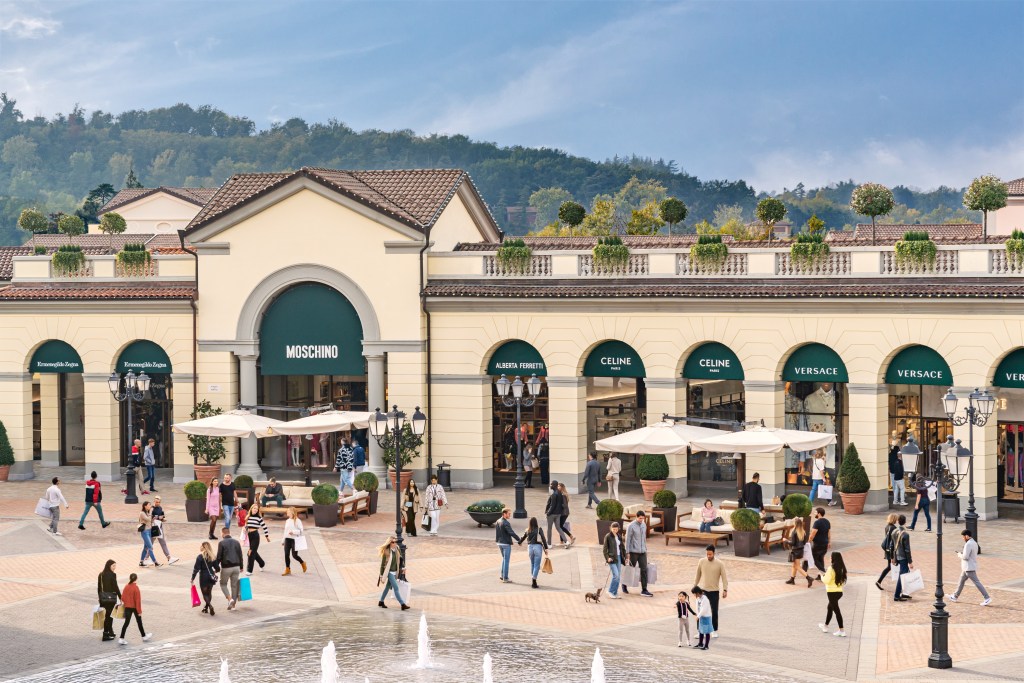
Shop at Serravalle Designer Outlet and Save 70%
Avoid wasting valuable time running from store to store in town, and instead discover a broad range of brands and much more at the Serravalle Designer Outlet. Conveniently situated just an hour from Milan, this outlet offers an extensive selection of designer brands in one accessible location.

 Eco-conscious shoppers will be pleased to know that large outlet retailers like Serravalle Designer Outlet support environmental and economically sustainable solutions.
All their shuttle busses are fuel efficient. All daily energy needs are met using 100% green electricity, landscape irrigation is managed by a recycled rainwater system and over 80% of the waste is recycled through a process in which all the Brand Partners of the Center are involved.
Serravalle Designer Outlet is playing an integral role in promoting growth in its local region of Monferrato through its active participation as a founding member of #ThinkSerravalle. This association is made up of businesses, agricultural enterprises, and tourism providers in the area. Serravalle Designer Outlet’s involvement underscores their commitment to community development and their efforts to contribute positively to the local economy. This collaboration also highlights their dedication to fostering an environment where local businesses can flourish, agriculture can thrive, and tourism can increase, ultimately leading to a more prosperous community.
All in all, there are several major brands to which we can tip our hats for their efforts in promoting a sustainable world. These companies are not only profitable, but also prioritize environmental responsibility, demonstrating that success and sustainability can indeed go hand in hand. Their initiatives are making a tangible difference, setting a commendable example for other businesses to follow. These brands are proving that it’s not only possible, but also beneficial for businesses to operate in a way that respects and conserves our planet’s resources.
Article by Celia Abernethy, Milanostyle.com
Featured image by Belish on Depositphotos
Subscribe to our Free Newsletter
Subscribe to get the latest news, updates, and invitations.
Discover more from MilanoStyle.com
Subscribe to get the latest posts sent to your email.
