

Moving to a vibrant city like Milan in Italy can be an exciting but daunting endeavor, with finding suitable accommodation and securing employment being the primary concerns for potential newcomers. The quest for a place to rent in Milan can be competitive due to the city's popularity, so it is essential to start the search well in advance. The Milanese rental market offers a variety of options, ranging from contemporary apartments in the city center to more affordable options on the outskirts.
Lots of people write into Milanostyle.com asking questions BEFORE they even get here. Questions like:
- “I'm moving to Milan, where should I live?”
- “Is Milan a good place to live?”
- “How do I find an apartment in Milan?”
Relocating to Italy and finding an apartment to rent or finding a job are the top concerns for anyone wanting to move to Milan. If you are wondering where to live in Milan, then you are in the right place. I have selected some of the best neighborhoods for living in Milan.
Neighborhoods of Milan
Milan in the region of Lombardy has a population of about 1,373,600 and spans 181,67 km². The city of Milan was built around the central cathedral, il Duomo. All streets and roads reach out and connect like a spider web. The city is sectioned into 9 municipalities. In each municipality there is a president and a city council, elected at the same time as the mayor and the municipal council. And within each, its own neighborhoods. As a general rule, when looking for a street address, the lower numbers are closest to the Duomo. As you move up the street away from the city center, the numbers get higher.
There are easily thousands of neighborhoods and it is not unheard of that families stay in the same area for generations. If your neighborhood is well serviced, and has supermarkets, shops, schools and a doctor, it makes living in Milan very pleasant.
When thinking about neighborhood factors and how long families stay in one place, it raises bigger questions about long-term mobility and future living trends. This is especially important for those comparing life in Europe with regions like the Mediterranean or Caribbean while exploring options for getting citizenship through investment.
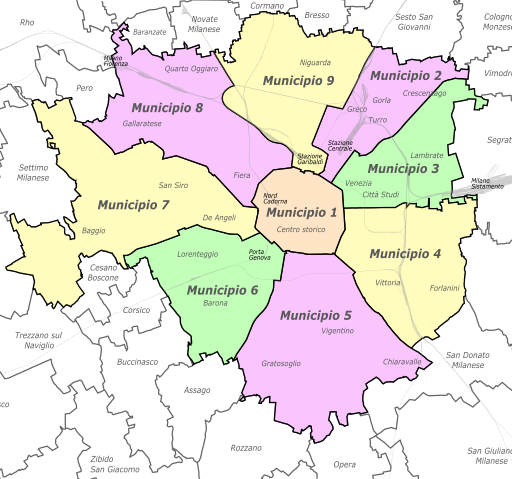
I'm moving to Milan, where should I live?
Of course you must choose an budget friendly neighborhood in Milan. Like most property in Italy, the closer to the town center, the more expensive it is.
Milan's public transportation system is excellent. You get get most anywhere in the city. If your house is close to a metro, bus or tram stop, you may not even need a car.
To get a feel for Milan, tourist guides can give you an idea of what neighborhoods are popular, but you may also consider a relocation tour. A relocation tour is usually done with a real estate agent or relocation advisor who will get to know you and help you make choices best suited for your budget and family lifestyle.
You may want to keep in mind busy that busy tourist areas like Brera or Piazza Duomo will be flooded with people on warm summer days when the tourists are out. Traffic might be tense in areas where there is a stadium or expo center.
Living near a metro stop is ideal. To get an idea for living in Italy, narratives like Living in Italy by Stef Smulder are fun and practical at the same time.
Recommended neighborhoods in Milan
My suggestions and the best areas to live in Milan (and my personal favorite areas of town) for a young professionals moving to Milan would be:
Sign up for the MilanoStyle newsletter
City center / Duomo: living in the city center has its pros and cons. For example, public transportation is extremely accessible, if you work in the center you can go on foot, and restaurants, museums and all the sights are close by. However, it does get busy with tourists, outdoor events and concerts in the summer may disturb your sleep, and you will need a generous budget for rent or to buy.
Brera/Solferino: prices are outrageous but if it is short term, it will be very memorable to have lived in the center of town. There are also some of the old canals and winding cobblestone roads.

Porta Romana: near enough to the center and far enough removed to not be so chaotic. Anywhere between metro stops Crocetta and Pt. Ramana is a great location.
Magenta/Vincenzo Monti: is very central, and very charming and close to the Parco Sempione, – great if you have a dog or like playing Frisbee/jogging on the weekends.
Some of the best places to live in Milan are located outside the city center.
Corso Sempione: No metro stops bu very accessible by tram line 1 that goes right into the center. The area is very residential and quiet on the weekends. There is also alot of greenery around. Rental prices will be higher closest to Arco della Pace (Parco Sempione).
Città Studi: a bit off the center, but it is an affordable area- near the university. The buildings are typical block apartments usually but there is allot of green and park areas. You will need a scooter, transportation is a bummer from that area.
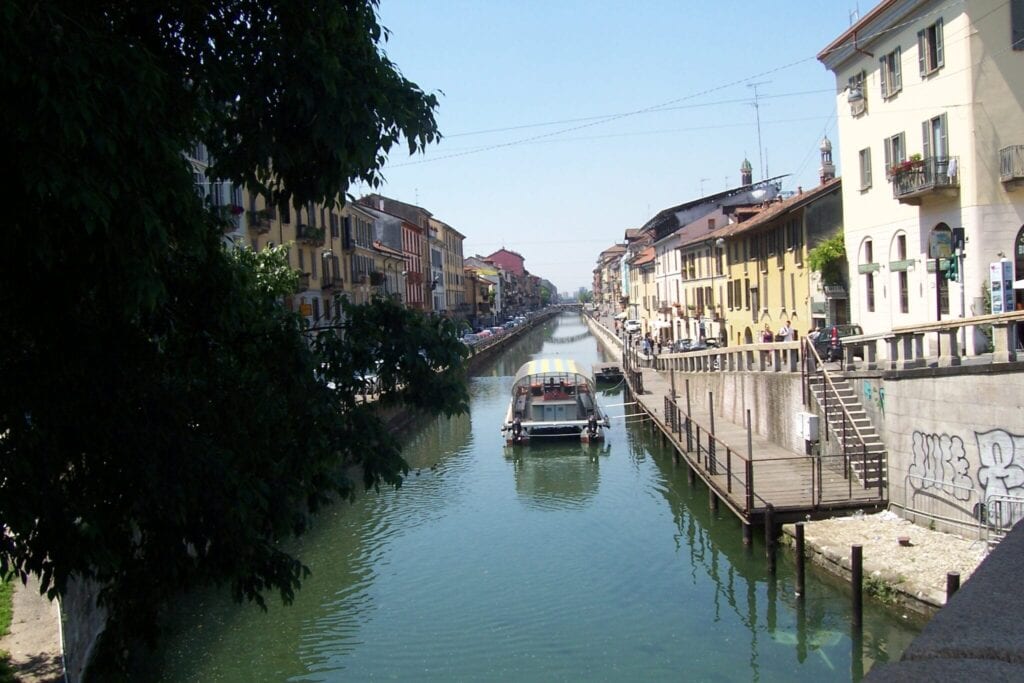
Naviglio: the old canals and cobble stone streets are very charming. There is a lively cafè and pub culture, especially in the summer. The buildings are usually called ‘ringhiera' characterized by long balconies connecting each apartment. The weekend markets could prove to be a burden or a blessing- depending on what you think of Sunday markets.
City Life: designed to be a modern and sustainable urban project, City Life was built on the old city fair grounds and is now a residential, commercial and business district located a short distance from the old city center and covers an area of 36.6 hectares (90 acres). Skyscrapers and modern buildings were designed by esteemed architects such as Zaha Hadid, Arata Isozaki and Daniel Libeskind. As it was a central meeting point for the Fairgrounds, it is well serviced by public transportation.
Porta Nuova/Isola: This too is a newly rebuilt area. Porta Nuova literally meaning “New Gate” is one of the main business districts of Milan. Named after the well-preserved Neoclassic gate built in 1810 on this site, it is now one of Italy’s most high-tech and international districts, containing the country’s tallest skyscraper: the Unicredit Tower. The area known as Isola is just north of the Garibaldi train station. This is where the famous building “Bosco Verticale”, The Vertical Forest is located. 900 trees and over 2,000 plants decorate its facades. It’s a new, young area and has good public transportation especially for intercity train travel from the Garibaldi train station.
All of these areas are quite easy to get to Linate airport for national traveling and easy to get to Cadorna station for the Malpensa express.
Need help finding rentals in Milan?
Explore rental apartments in Milan with Homelike. Browse listings today to find your ideal home!
Do you need help finding property in Italy?
Lionard Luxury Italian Real Estate can help, send an inquiry:
If you want to live in Suburbia, there are areas like:
Arese, Milano 2, Milano 3, and San Felice, that all offer apartment complexes. Some are closed communities. You will need a car.
Live in another city and commute to Milan:
Monza – 10 minutes train commute
Varese – 54 minute train commute
Live on Lake Como and commute to Milan:

Lecco – 40 minute train commute
Como -36 minute train commute
You may also be interested in:
Renting an Apartment in Milan: What to Know
Find out what Milan commuters say about their experiences
Article by Celia Abernethy
Featured image of Bosco Verticale by Sophie Otto
Subscribe to our Free Newsletter
Subscribe to get the latest news, updates, and invitations.
Discover more from MilanoStyle.com
Subscribe to get the latest posts sent to your email.
